Last updated November 17, 2026




Free written scope consultation - allowances, timeline, and change-order rules on paper before a single trade is scheduled
Windows & Doors Troubleshooting: Common Problems and How to Fix Them
Here’s a fact that surprises most homeowners: a sticking door and a sticking door can be two completely different problems. In Yorba Linda, we get calls about doors that swell shut every August. Some of those doors just need a humidity adjustment. Others are sitting on a foundation that’s shifting, and the door is the first thing that noticed. The symptom looks identical until the repair bill isn’t. This guide is built to help you tell them apart, from a drafty window around a Yorba Linda canyon home to water sneaking in at a slider before the rainy season hits. You’ll learn which issues are a weekend fix and which ones are telling you something bigger is going on.
Quick Answer
Most window and door problems fall into two buckets: minor maintenance issues (worn weatherstripping, dried caulk, loose hardware, dirty tracks) that you can handle yourself in under an hour, or symptoms of a structural or installation problem (flashing failure, frame racking, failed sealed glass units) that need a professional assessment before they cause water damage or rot. A sticky door that gets progressively worse each season, condensation sealed between panes, and water staining around a window frame are the signals worth calling about. Drafts that come and go, dirty tracks, and stiff handles usually aren’t.
Styles & brands we work with
- Kitchen remodeling
- Bathroom remodeling
- Home additions & ADU
- Roofing
- Windows & doors
- Driveway & pavers
- Fence
Table of Contents
- Why Is My Door Sticking? Seasonal Movement vs. Structural Racking
- Drafty Windows: Weatherstripping, Seal, or Replacement?
- Condensation Between Glass Panes: What It Means and When to Replace
- Sliding Doors: How to Test for Track Damage, Roller Wear, or Frame Misalignment
- Water Infiltration at Windows: Flashing Failure vs. Caulk Failure
- Window Hardware and Operation Problems
- Door Hinge, Strike Plate, and Alignment Adjustments
- Common Mistakes to Avoid
Why Is My Door Sticking? Seasonal Movement vs. Structural Racking
A door that sticks only in summer is almost always a wood door expanding in the heat, or a jamb that’s swelling against a tight gap. The fix is often a light sanding of the strike edge, a hinge adjustment, or simply waiting out the season. A door that sticks a little worse every year, in every season, is telling you something else. That’s a symptom of the frame no longer sitting square.
Yorba Linda homes sit on some pretty active clay soil. The hillsides and canyon-adjacent neighborhoods see soil that swells in wet years and shrinks through our dry, hot summers. Over time, that movement can rack a door frame a fraction of an inch, and a fraction is all it takes. We’ve seen it in older homes near the Yorba Linda Country Club and in newer builds on graded lots where drainage wasn’t handled right.
How to tell the difference:
- Check the gap around the door on all four sides. A seasonal door still has an even gap; a racked frame shows a visible wedge (wide at one corner, tight at the opposite).
- Look at the top of the door where it meets the jamb. If the reveal line is visibly tapered, that’s a frame out of square.
- Open the door halfway and let go. If it swings on its own, the hinge side is out of plumb.
- Walk the floor near the threshold with a level, or look for new cracking at the wall-to-floor joint. That’s a foundation signal, not a door signal.
- Check the same symptoms at other doors and windows in the house. One sticky door is probably weather. Three stick together and it’s the frame line.
If you’ve ruled out seasonal movement, the door is a messenger, not the problem. Sanding it down buys you a year and hides the real issue. That’s when it’s worth having someone look at the framing, the foundation, and the drainage around that side of the house.
Drafty Windows: Weatherstripping, Seal, or Replacement?
You can feel cold air at a window and jump straight to “I need new windows.” That’s the expensive path. Most drafts have a cheaper cause, and it’s worth ruling out before you spend on replacement. Our technicians have up to 12 years of experience, and this is one of the calls we walk homeowners through most.
Start with the dollar-bill test. Close the window on a dollar bill so half hangs inside and half outside. Try to pull it out. If it slides out with almost no resistance, the weatherstripping or the sash seal is the culprit. If it holds tight on all four sides, the leak is probably at the frame-to-wall joint, not the sash itself.
Here’s the decision tree we use:
- Draft at the sash edge, window closes firmly: worn weatherstripping. Replacing the strip is a low-cost fix you can often do yourself.
- Draft at the frame, especially around the edges: failed interior or exterior caulk line. Re-caulking with a quality exterior sealant handles it.
- Draft plus a visible gap between sash and frame, or the window won’t latch square: the sash is warped or the frame is out of square. This one needs a pro look.
- Draft at a double-hung or casement from a builder-grade window over 20 years old: at some point, replacement makes more financial sense than repair, because the glass and frame have both aged out.
And the honest answer on where replacement pays off: if you’re already planning exterior work and the windows are original builder-grade, upgrading to a quality brand like Andersen or Marvin as part of a bigger project is worth pricing alongside the repair. If they’re 10-year-old windows with a draft at one corner, re-caulk and move on. That’s the kind of line-item decision we walk through during a Groundwork Construction Co. of Yorba Linda home project consult before anyone signs off on a replacement quote.
Condensation Between Glass Panes: What It Means and When to Replace
Condensation inside the glass of a double- or triple-pane window means one thing: the sealed unit has failed. The inert gas or dry air between the panes has escaped, and moisture has entered. There’s no DIY repair, and no amount of exterior sealing will fix it. The window has to have the sealed glass unit replaced or the whole window replaced.
The good news is the timeline isn’t urgent. A foggy window won’t suddenly fail or fall out, and it’s not a water intrusion issue unless the fog is accompanied by actual liquid water pooling at the bottom of the glass. What it does mean is that the unit’s insulation value is gone. It’ll perform closer to a single pane for heat transfer, and depending on the coating on the glass, the solar control value drops too.
In Yorba Linda, the summer sun load on a west- or south-facing window is significant, and a failed unit facing the afternoon sun is the one that shows up first. We see it a lot on homes with 15- to 25-year-old dual-pane windows where the seal has aged out on the sun-exposed side. The rest of the house is fine.
When to replace, and when to wait:
- If it’s one window and the frame is in good shape, you can replace just the sealed glass unit (an “IGU”). It’s cheaper than a full window replacement.
- If the fog is accompanied by water droplets or staining at the base of the glass, the unit is past saving and the frame seal should be checked while you’re at it.
- If three or more windows on the same elevation have failed in the same year, the units are the same vintage and more failures are coming. That’s the point to price a full replacement instead of piecemeal IGUs.
- If the failed unit is on a window that’s also drafty, warped, or 20-plus years old, replacing the whole window makes more sense than the glass alone.
Sliding Doors: How to Test for Track Damage, Roller Wear, or Frame Misalignment
A sliding patio door that won’t glide smoothly is one of the most common complaints we hear. It’s also one of the easiest to diagnose, if you run the right tests. The three likely causes are worn rollers, a damaged or dirty track, or a door that’s out of alignment with its frame, and each one has a different fix.
Run these tests in order:
- The lift test. Grab the door handle and try to lift it slightly. If it lifts and then settles back down, your rollers are worn or the door is riding too low. That’s a roller or adjustment issue.
- The track visual. Shine a flashlight into the track. Grit, pet hair, and hardened debris cause most “sticking” complaints. Clean the track with a stiff brush and vacuum, then run the door again before you diagnose anything else.
- The square test. Stand at the end of the door and look down the frame. If the gap between the door and the jamb is visibly wider at the top than at the bottom (or vice versa), the door or frame is out of alignment, and the rollers aren’t the whole story.
- The track damage check. Run your finger along the track rail (gently). Feel any kink, bend, or dent? A bent track can be straightened or replaced. A track that’s rusted through or split at the ends is a replacement item.
- The corner check. Look at the corners of the glass and frame for water staining. If you see it, the door is leaking as well as sticking, and that’s a different repair than a roller swap.
In Yorba Linda we get mineral dust and wind-blown grit from the hills, so slide tracks on exterior doors load up fast. If you’re clearing that track twice a year, you’ll save yourself a roller replacement call every other year.
Water Infiltration at Windows: Flashing Failure vs. Caulk Failure
Water showing up at a window frame is where the two-bucket distinction matters most. A caulk failure is a surface leak and a relatively easy fix. A flashing failure is a structural leak, and it can rot the framing behind the wall before you ever see a stain on your interior drywall. The two look identical from inside, and telling them apart is the entire diagnosis.
Here’s the logic. Caulk is the sealant at the outside joint between the window frame and the siding, brick, or trim. Flashing is a metal or membrane layer behind the siding that redirects water that gets past the caulk away from the rough opening. The caulk is the first line of defense; the flashing is the backup. If the caulk fails and the flashing is right, you might see a small interior damp spot in heavy storms, and the fix is re-caulking. If the flashing was never installed or installed wrong, the caulk failure is just the trigger for water to get into the wall cavity.
How to tell them apart:
- Timing. Caulk leaks show up in wind-driven rain hitting that face. Flashing leaks show up in any sustained rain, because water is pooling inside the wall.
- Location. Caulk leaks often track along the frame or show at the sill corners. Flashing leaks show up as stains on interior drywall below or beside the window, or as soft or discolored drywall.
- Age of install. If the window was replaced in the last few years and leaking started soon after, flashing detail is suspect. If the window is original to the home and 20-plus years old, more likely caulk.
- Exterior inspection. Pull back the siding or trim at the top corner of the window if you can do it safely. No head flashing (or head flashing under the trim rather than above it) is a flashing failure.
We’ve opened a lot of Yorba Linda walls and found caulk-only installs where flashing was skipped. In a dry climate, that can pass unnoticed for years until a wet winter stresses it. If you see water at a window in Yorba Linda, the right move is an inspection, not another layer of caulk. Caulking over a flashing problem traps the water.
Window Hardware and Operation Problems
Hardware issues are the quietest complaints because they don’t damage anything. They’re also the ones most homeowners can handle themselves. If your casement window won’t crank, your double-hung won’t stay up, or your awning window won’t latch, it’s almost never the sash; it’s the mechanism.
Common fixes by symptom:
- Casement crank grinds or won’t turn: the operator arm is stripped or the pivot point needs lubrication. Sometimes the operator needs replacement, which is a common part on older windows.
- Double-hung won’t stay open: the balance or spiral tension on that side has failed. On most modern vinyl and wood double-hungs, the balance can be replaced without removing the window.
- Window won’t fully latch: check the weatherstrip first, then the latch or keeper. A window that closes but won’t latch is often sitting slightly proud of the frame, which can be a hinge or a sash-alignment issue.
- Single-hung or slider is hard to open after setting: the sash is binding on the frame. Look for paint, caulk, or a swollen weatherstrip. A light cleaning and dry lube on the sash track handles most.
And DO NOT force a crank or a latch that’s stuck. You’ll bend the operator or snap the mechanism, and then you’re replacing hardware you could have avoided. If it won’t move with steady firm pressure, back off and inspect.
Door Hinge, Strike Plate, and Alignment Adjustments
An interior or exterior door that hangs wrong is usually a hinge, strike plate, or frame problem, and it’s a good one to handle early. Left alone, a misaligned door wears out its weatherstripping, binds its lock, and eventually fails to latch at all. None of that is dangerous, but it’s all annoying and it all compounds.
The diagnostic order we recommend:
- Look at the reveal gap. The gap between the door and the frame should be roughly even all around. A wide gap top and tight bottom means the door is sagging from worn top hinges.
- Test the latch alignment. Close the door slowly and watch the latch and strike plate. If the latch hits the strike plate’s edge or doesn’t drop into the hole cleanly, the strike needs adjustment.
- Check the hinges for looseness. A screw that won’t hold in the top hinge is the number one cause of a sagging door. A hinge screw hole that’s stripped can be repaired with a longer screw or a wood filler-and-redrill if the hinge is going back in the same spot.
- Look for swelling on a wood door. If the door binds only at the leading edge and only in humid weather, the door itself is the issue, not the hinges. Light sanding of the strike edge solves it for the season; you may want a weatherproof sealer coat on the edge for a longer fix.
- Check the threshold. An exterior door that drags at the bottom is often a sill or threshold problem, not a hinge issue. New weatherseal on the threshold can sometimes be swapped without pulling the door.
If you find yourself fixing the same door’s alignment twice in a year, or if multiple doors in the house are misaligned in the same direction, that’s beyond a hinge-level adjustment. That’s the signal to look at the frame and the structural picture, not just the door.
Common Mistakes to Avoid
- Caulking over a flashing problem. Slapping a fresh bead of sealant on a window that’s leaking from a head-flashing failure traps the water inside the wall and accelerates rot. Diagnose first, seal second. We’ve seen Yorba Linda homeowners pay for two re-caulk jobs before anyone opened the wall.
- Sanding a door that keeps sticking worse every season. If the door is getting progressively tighter, sanding is buying a few months and hiding a foundation or framing issue. That’s the mistake that costs money: you pay for the sand-down now, then the framing repair later.
- Replacing windows to fix a draft at the frame. A draft at the frame-to-wall joint is a caulk issue, and it’s $50 of sealant. Replacing a $1,200 window to fix a caulk problem is the most expensive version of this mistake.
- Forcing a stuck sliding door. Yanking a slider along a bent track or worn rollers strips the track further and can crack the glass corner. Clean the track and test the rollers before you push harder.
- Ignoring a fogged IGU for years. Condensation between panes doesn’t leak into the home, so it’s tempting to skip. But a failed unit in a Yorba Linda south-facing window that’s exposed to full sun is more likely to be joined by a second failed unit sooner than you’d expect. Replace the failed glass while the frame is still worth saving.
- Painting over weatherstripping or hinges. Paint on a weatherstrip stiffens it and breaks the seal; paint on a hinge freezes the pin. Tape both off before you paint a window or a door. Small step, saves a lot of frustration.
- Letting three or more windows fail before calling anyone. One failed sealed unit is a glass replacement. Five in the same year means the batch is done, and the smarter financial move is a full window replacement quoted together, with quality brands like Andersen or Marvin, than five separate glass swaps.
When to Call a Professional
Call a professional when the symptom points past the surface. A door that keeps binding worse every season, water staining at a window that shows up in any sustained rain, a sliding door that won’t run after a track cleaning, three or more failed sealed units in the same year, or a window that shows visible gaps between sash and frame. Any of those signals warrant a full inspection, not a home-store patch. Also call if you’re planning a bigger project and want the window and door work handled alongside it, whether that’s a Home Additions & ADU in Yorba Linda build where door alignment is critical, or a Driveway & Pavers in Yorba Linda install that changes drainage around the foundation and affects how your doors sit. Groundwork Construction Co. of Yorba Linda offers free estimates in Yorba Linda. Call (888) 255-9354.
See the difference
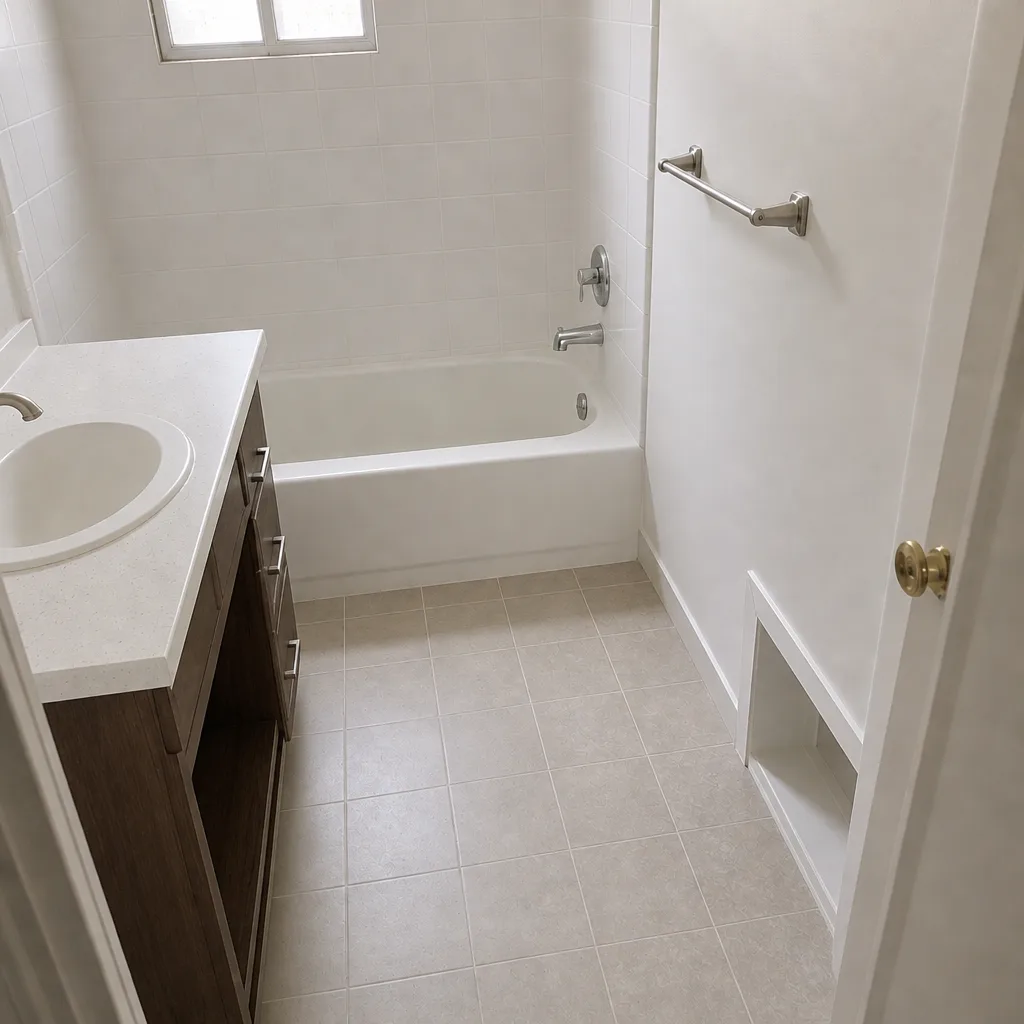
 Before
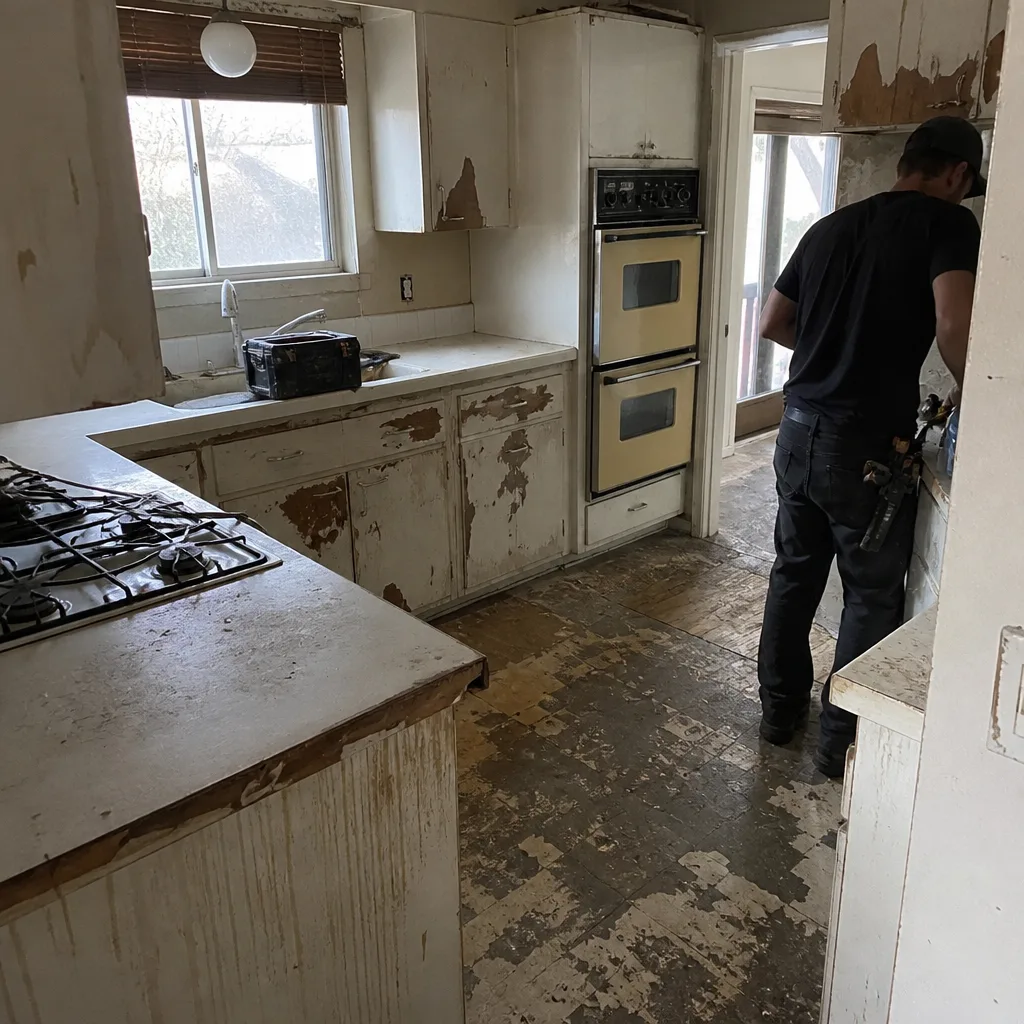
 After
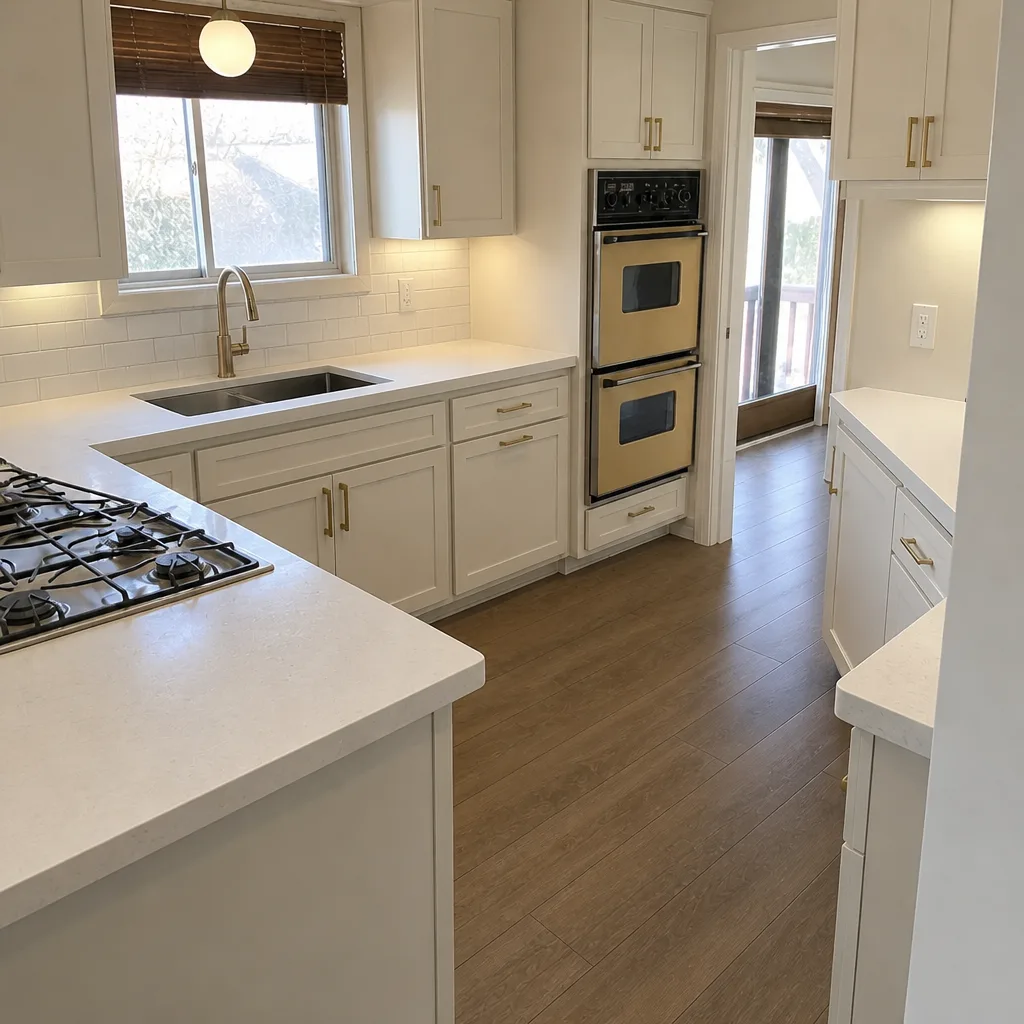
 Before
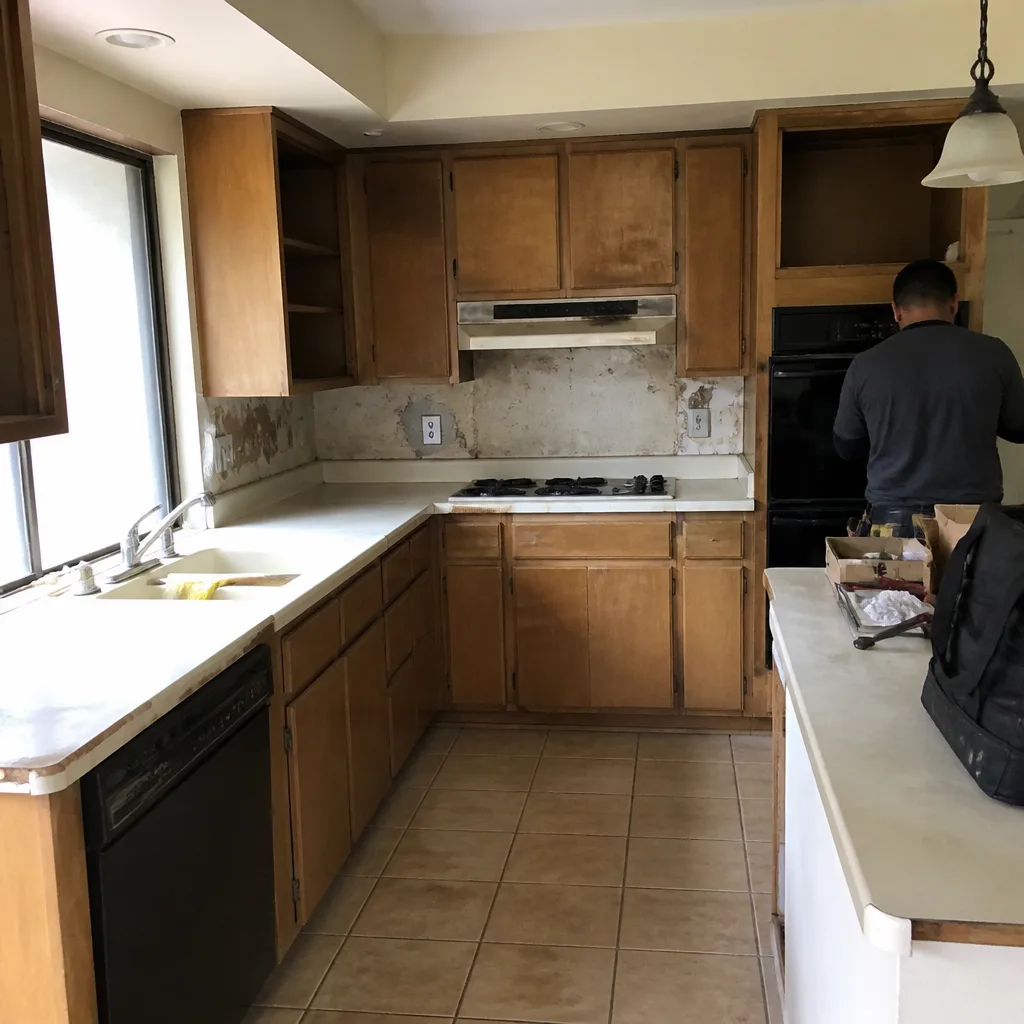
 After
 Before
 After
Frequently Asked Questions
Your front door most likely sticks in summer because of humidity-induced swelling of the door or jamb, which is common in Yorba Linda and throughout Southern California on wood doors. If the stickiness is limited to summer and the door moves freely in winter, it’s humidity. If the door sticks worse each year across all seasons, it’s frame movement and worth a structural check. Call (888) 255-9354 for a free inspection if you’re not sure which one you’re dealing with.
Condensation between panes means the sealed glass unit has failed, and the fix is replacing the glass or the window. It’s not urgent in the sense of causing water damage, but the insulation value of that window is gone, so it’s worth pricing sooner. Call (888) 255-9354 for a free estimate on glass or full-window replacement.
You can often fix a drafty window yourself if the issue is worn weatherstripping or a failed caulk line, which are both surface-level seals. If the draft is coming from a gap between the sash and frame, the sash is warped, or the window won’t latch square, that’s a professional call. Call (888) 255-9354 to have the window evaluated before you spend on replacement.
Caulk failures leak mainly in wind-driven rain along the frame or sill corners, while flashing failures leak in any sustained rain and typically show up as interior drywall staining below or beside the window. If you can’t see the difference, the safest move is an inspection before adding more sealant. Call (888) 255-9354 for a free estimate.
Probably not. A hard-to-open slider is most often a dirty track or worn rollers, both of which are repair items. If the track is bent or split, or the door frame is visibly out of square, replacement starts to make more sense. Call (888) 255-9354 and we’ll walk through the options with a free estimate before you commit to a replacement.
A single window or door repair is typically a same-day job, while a full window replacement across a typical Yorba Linda home runs two to four days depending on the count and exterior details. We quote a written line-item timeline before work starts, and the number you see is the number you pay. Call (888) 255-9354 to schedule your free estimate.
The Bottom Line
Most of what you’ll deal with at your windows and doors is upkeep: weatherstripping, caulk, tracks, hinges, hardware. Those fixes are cheap and most are within reach of a homeowner with a few tools. The problems worth a call are the ones that get worse on a schedule: a door that sticks more each year, condensation locked between panes, water that shows up in any rain, a slider that’s binding on the frame. Those are the signals that point to structure, not surface. Learning to tell them apart is the whole game. If you’re in Yorba Linda and the diagnosis feels uncertain, our team can look at it with you and give you a straight answer before you spend a dollar more than you need to. Every Groundwork project is backed by our 730-Day Done Right Promise, because if it’s not done right, we make it right.
Related Groundwork Guides
- Fence Installation in Yorba Linda
- Driveway & Pavers in Yorba Linda
- Home Additions & ADU in Yorba Linda
- Groundwork Construction Co. of Yorba Linda home
Ready to get your windows and doors sorted? Call (888) 255-9354 for a free estimate with Groundwork Construction Co. of Yorba Linda. Upfront pricing, no surprise line items, and quality brand partners on every project.
Written by the team at Groundwork Construction Co. of Yorba Linda.