Last updated November 17, 2026

Free written scope consultation - allowances, timeline, and change-order rules on paper before a single trade is scheduled
DIY vs Professional Fence Installation: What’s Safe to Do Yourself
The single most common call fence contractors get isn’t to build a new fence. It’s to fix a DIY one that’s already failing. Posts set too shallow, concrete mixed too wet, panels twisting after the first rainy season because the holes were undersized for the soil. The homeowner saved a few thousand dollars on the install and now faces a repair bill that can cost more than the professional job would have. That’s the honest math, and it’s worth understanding before you pick up a shovel. This guide draws a clear line between what a capable homeowner can genuinely handle and the three or four steps where DIY fence work in Yorba Linda reliably turns into a rescue job.
Quick Answer
Replacing individual fence boards, swapping hardware, staining or sealing, and adjusting a sagging gate are all safe and reasonable DIY projects for most homeowners. Anything that involves digging and setting posts, working on a shared property line, or building on a sloped lot is where professional installation earns its cost – failures there aren’t correctable without starting over, and the repair often costs more than the original install.
Styles & brands we work with
- Kitchen remodeling
- Bathroom remodeling
- Home additions & ADU
- Roofing
- Windows & doors
- Driveway & pavers
- Fence
Table of Contents
- What You Can Safely Do Yourself
- Why Post-Setting Is the Irreversible Step
- Sloped Lots: Where Layout Math Gets Real
- California Law, Shared Property Lines, and Permits
- How to Vet a Fence Contractor
- Material Choices and What They Demand
- The Real Cost Comparison
- Common Mistakes to Avoid
What You Can Safely Do Yourself
Some fence work is genuinely homeowner-appropriate, and no contractor should tell you otherwise. If you’re handy, patient, and honest about your limits, these tasks are well within reach. We’ve walked away from plenty of jobs where the homeowner was doing exactly the right thing by calling – and from others where they’d already handled the simple stuff well and only needed help with the heavy lifting.
The work that falls in the DIY zone:
- Replacing individual fence boards or pickets. A single rotten board is a 20-minute job. Match the profile and stain, pull the nails or screws, drop in the new piece.
- Swapping hardware. Hinges, latches, handles, gate springs, and post caps are simple replacements that don’t touch the structural footings.
- Staining or sealing. A weekend of prep and a couple of coats of quality stain will extend the life of a wood fence meaningfully. This is one of the highest-return DIY tasks on any property.
- Minor gate adjustments. A gate that drags, sags, or sticks is usually a hinge tightening or a slight plane adjustment away from working right.
- Cleaning and light repair. Pressure washing, pulling weeds from the fence line, replacing a single broken cap rail.
What ties these together: none of them touch the post footings. The moment you’re digging a hole, mixing concrete, or setting a post in the ground, you’ve crossed into the work that fails silently and then shows up a year later as a leaning fence. Yorba Linda’s clay-heavy soils and the seasonal shrink-swell cycle make that failure mode more common here than in sandier parts of Southern California. When a post is set too shallow in this soil, the winter rains do the rest.
Why Post-Setting Is the Irreversible Step
Every other part of a fence can be undone. A board can be unscrewed. A gate can be rehung. The post is different. Once the concrete cures, correcting an undersized hole, a post set at the wrong depth, or concrete mixed too wet means digging out a cured concrete plug, cutting the post, and starting over. That’s the step where a $3,000 DIY project quietly becomes a $5,000+ professional rescue.
Here’s what a correct post install actually involves, in plain terms:
- Hole depth tied to local frost line and soil. In Yorba Linda, holes typically run 24 to 36 inches deep depending on post height and fence type. Shallow holes in clay soil lean within one wet season.
- Hole diameter roughly three times the post width. A 4×4 post wants an 8- to 12-inch hole. Undersized holes don’t give the concrete enough bearing surface.
- Gravel base for drainage. A few inches of gravel at the bottom of the hole lets water escape instead of pooling around the post and rotting it from the base up.
- Correct concrete mix and consistency. Fast-setting mixes sound convenient but cure too fast for proper adjustment. A standard bag mix at the right water ratio is what most professional crews use.
- Plumb and brace while curing. Posts need bracing until the concrete sets. Twenty-four to 48 hours is typical, and bracing has to hold through it.
- Proper spacing on center. Six to eight feet is standard for most residential fence types. Off-spacing throws off every panel down the line.
None of this is secret knowledge. But it’s also not what most YouTube tutorials show, and getting any of it slightly wrong is not correctable once the concrete cures. That’s the honest case for professional post-setting, and it’s the same case whether you’re in Yorba Linda or anywhere else in Southern California.
Sloped Lots: Where Layout Math Gets Real
Yorba Linda has a lot of sloped lots. That’s the reality of the hillside neighborhoods, and it changes fence installation from a geometry problem into an experienced trade. On a flat lot, fence panels are uniform and easy to plan. On a grade, you’re choosing between two installation methods, and getting it wrong produces a fence that either looks wrong or fails at the transitions.
The two approaches:
- Stepped panels. Each panel is level, but every panel sits a few inches lower than the previous one. The steps follow the grade. This is the more common approach on steeper lots and gives a clean, terraced look.
- Racked panels. Each panel is a parallelogram, following the slope. Common on gentle grades and on wood fences where the pickets can angle with the grade.
What makes sloped lots harder than flat ones:
- Layout math has to account for grade change across every post spacing. Two posts eight feet apart, with a one-foot drop between them, change the panel geometry.
- Post heights have to be stepped rather than uniform, which means the post depth and hole depth change across the run.
- Drainage matters more. Water runs downhill and pools behind fence lines on lower lots. Posts set without accounting for that rot faster.
- Gate placement on a slope is a separate puzzle. The gate has to swing clear on a grade, which usually means a stepped opening or a specialized gate frame.
Getting this right the first time is where a professional install pays for itself on a Yorba Linda hillside lot. Getting it wrong is a fence that looks off, binds at the gates, or leans unevenly after a couple of seasons. If you want the professional installation path done properly, our team handles Fence Installation in Yorba Linda with the layout math, footing depth, and grade transitions accounted for from the design phase.
California Law, Shared Property Lines, and Permits
This is the section that catches most DIYers off guard in California. Fence work on or near a shared property line carries legal and permit requirements that aren’t obvious, and an unlicensed DIYer often doesn’t know to look. Getting this wrong isn’t a code problem. It’s a neighbor dispute or a title issue down the line.
What California law generally expects when fence work touches a shared line:
- Know where your property line actually is. A fence placed even a few inches over the line, even accidentally, can trigger a dispute. If there’s any uncertainty, a lot survey is the answer, not a guess from the assessor’s map.
- California good-neighbor fence law. When two adjacent residential properties both benefit from a boundary fence, the cost is generally shared unless a written agreement says otherwise. That means your neighbor may have legal standing in what gets installed, and a working relationship with them ahead of the project is worth the conversation.
- Yorba Linda permit rules. The city generally treats fence permits based on height limits (common thresholds sit around six feet for a rear or side yard, lower for a front yard). Anything taller than the threshold typically requires a permit and possibly a setback review. That’s a call to the City of Yorba Linda’s building department before digging, not after.
- HOA review. Many Yorba Linda subdivisions have HOA architectural review requirements that sit on top of city permit rules. A fence approved by the city can still be rejected by the HOA if the material or height doesn’t match community guidelines.
- Utility locates. In California, before you dig, call 811 to have underground utilities marked. This is free, and skipping it is the fastest way to turn a Saturday project into a very expensive repair.
A licensed contractor navigates all of this as part of the job. That’s not a value-add. It’s the baseline expectation for professional fence work in California.
How to Vet a Fence Contractor
If you’re going to hire, hire well. The fence trade has plenty of operators who can build a straight fence and no shortage who can’t, and the difference shows up a year in. Here’s what to look for, drawn from the questions we ask ourselves as a business before we take on a job.
Licensing and insurance
- The contractor should have a valid California contractor’s license (check the CSLB lookup online before signing anything).
- They should carry general liability insurance and workers’ compensation. Ask for certificates, not verbal confirmation.
- A licensed contractor pulls permits. An unlicensed one usually asks you to pull them “as the homeowner,” which shifts liability onto you.
Warranty and scope
- Get the workmanship warranty in writing. Know the term and what triggers it. Our Groundwork Construction Co. of Yorba Linda home page reference lays out our 730-Day Done Right Promise – if it’s not done right, we make it right – which is one of the longest workmanship guarantees in residential construction.
- The bid should be line-itemed. Post depth, concrete spec, material brand, and cleanup should all be spelled out. Vague bids are where change orders live.
- Ask what’s excluded. A bid that doesn’t list exclusions isn’t complete.
Trade-specific questions
- “How deep will the posts be set, and what concrete mix are you using?” A confident answer here reveals experience. A vague one doesn’t.
- “How do you handle the grade on this lot – stepped or racked panels?” If they hesitate, they haven’t done enough sloped installs.
- “What’s your permit process, and do you handle the 811 utility locate?” A clear yes here is a tell.
- “What materials are you specifying, and why?” Any contractor worth hiring will talk material brands and grade without prompting.
Material Choices and What They Demand
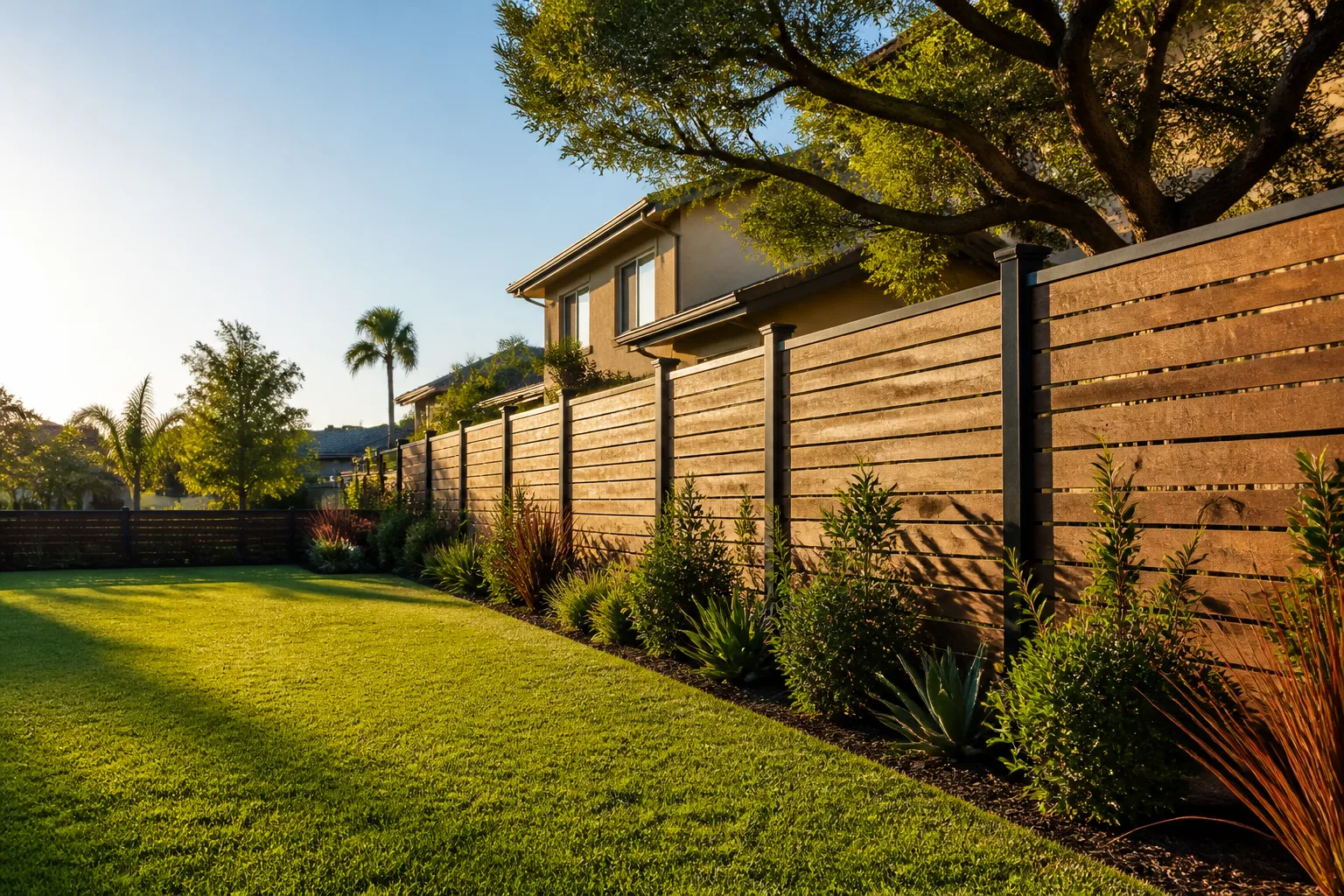
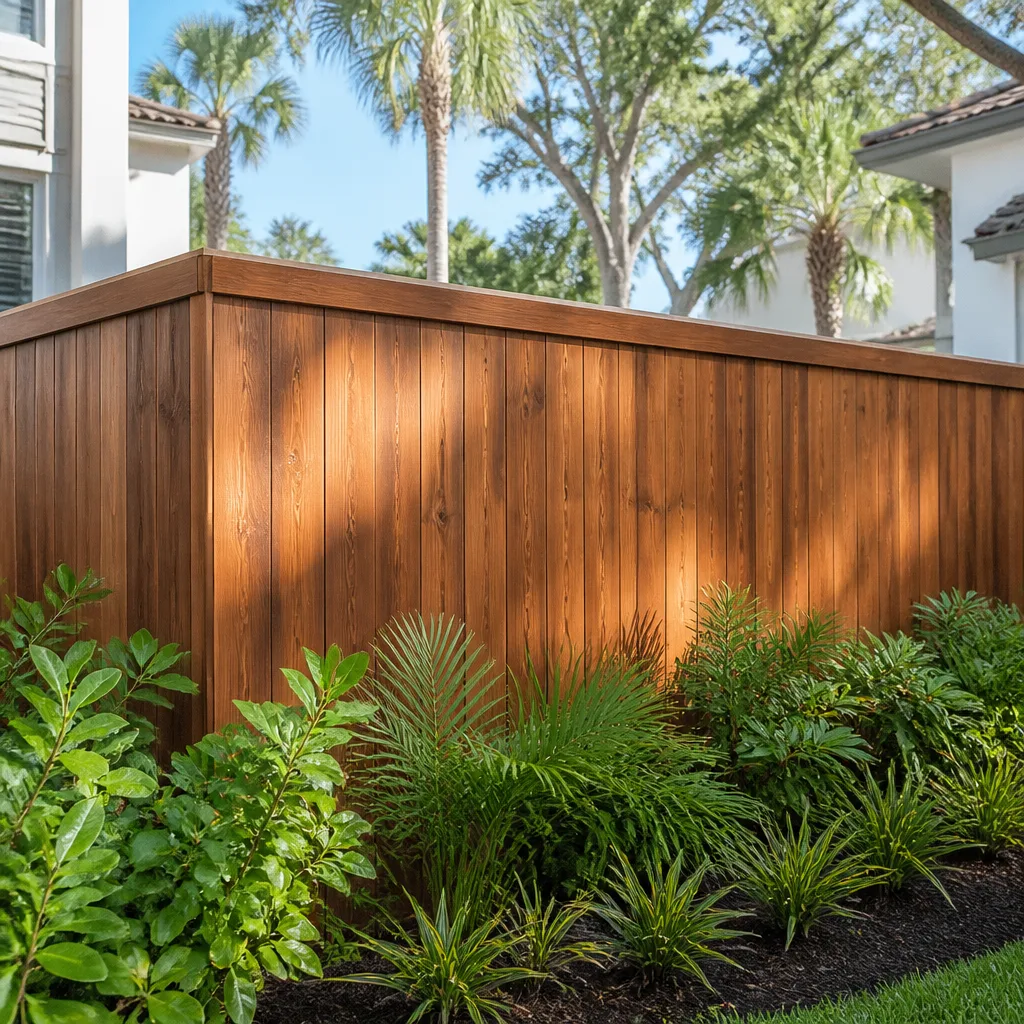
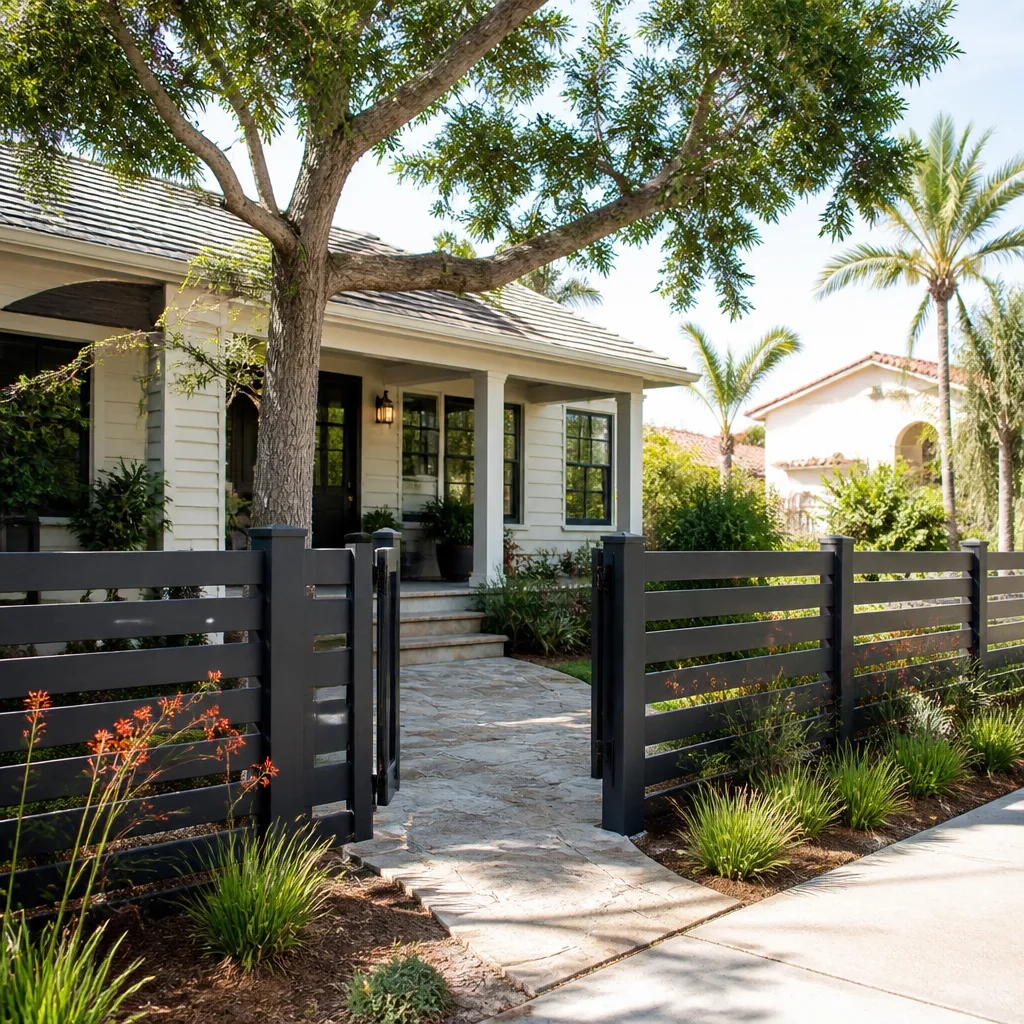
Fence material matters because it dictates how much of the installation is genuinely DIY-friendly. Wood fences (cedar and redwood being the standards in Southern California) need more maintenance and show misaligned posts fastest. Vinyl fences are more forgiving on minor layout errors but less forgiving on grade, since vinyl panels don’t rack well. Composite and metal systems have their own installation demands. None of them work well on a bad post install.
Most professional fence teams work from a curated material lineup – brands with track records, not whatever the local yard has on sale. This is where the choice between quality and availability is actually made, and most homeowners never see the difference until year eight. If you’re thinking about broader property upgrades alongside the fence, the same logic applies to hardscaping. Our Driveway & Pavers in Yorba Linda work runs on the same material-quality discipline as our fence work.
The honest read: choose the material based on your property, your budget, and your realistic maintenance appetite. A wood fence that’s never stained will be a rotting headache in a decade even with perfect post installation. A vinyl fence that gets installed wrong on a slope will fail regardless of how good the material is.
The Real Cost Comparison
DIY fence installation is cheaper on paper and sometimes cheaper in reality. It’s also where the biggest gap exists between projected cost and final cost. Here’s the honest line-item comparison for a typical Yorba Linda residential fence project, in directional terms:
- Materials (DIY or pro): Similar costs. Contractors get better pricing, but the gap is smaller than homeowners expect.
- Tool and equipment rental (DIY only): Post-hole diggers, mixers, levels, and bracing. Usually a few hundred dollars for a one-time project.
- Labor (pro only): The bulk of the professional bid, and the part that pays for itself when a post fails.
- Permits (pro handles, DIY handles): Usually modest, but the permit process is the step homeowners most often skip and most often regret.
- The failure cost: Here’s the number that rarely makes it into a DIY budget. A leaning fence failure, on average, costs more to correct than the original professional install – redo labor, new concrete, new posts, sometimes partial fence removal.
The blunt version: DIY makes sense for the board-level work and gets expensive fast on the post-level work. Professional installation carries a higher upfront number and a much lower risk of the repair bill. That’s the trade, and it’s worth making the call informed.
The Full-scope side of the business – from fence work to Home Additions & ADU in Yorba Linda – exists because homeowners keep asking for one contractor who can handle the property-wide conversation. When the fence is one piece of a larger investment, that conversation matters.
Common Mistakes to Avoid
- Setting posts in clay soil without drainage gravel. Yorba Linda’s clay-heavy soil traps water around posts. Without a gravel base, the post rots from the bottom up, and the fence looks fine until it doesn’t.
- Mixing concrete too wet. A wetter mix pours easier and cures weaker. It’s the mistake that causes the post to lean within the first wet season.
- Skipping the 811 utility call. Any dig in California should start with a utility locate. It’s free and it prevents the nightmare scenario of hitting a line.
- Building on a shared property line without the neighbor conversation. California’s good-neighbor fence rules give your neighbor real standing on boundary fences. Having the conversation first is the difference between a working relationship and a dispute.
- Going over the height limit without permitting. Yorba Linda treats fences over the standard height threshold as permitting territory, and HOA rules often stack on top. Pull the permit or don’t build the fence to that height.
- Racking vinyl panels on a slope. Vinyl systems are less forgiving on grade than wood. If the panel can’t rack, it has to step, and that requires planning before the posts go in.
- Not staining a new wood fence within the first year. Fresh wood needs a season to dry, then a coat of stain. Skip it and the fence goes gray and starts to check.
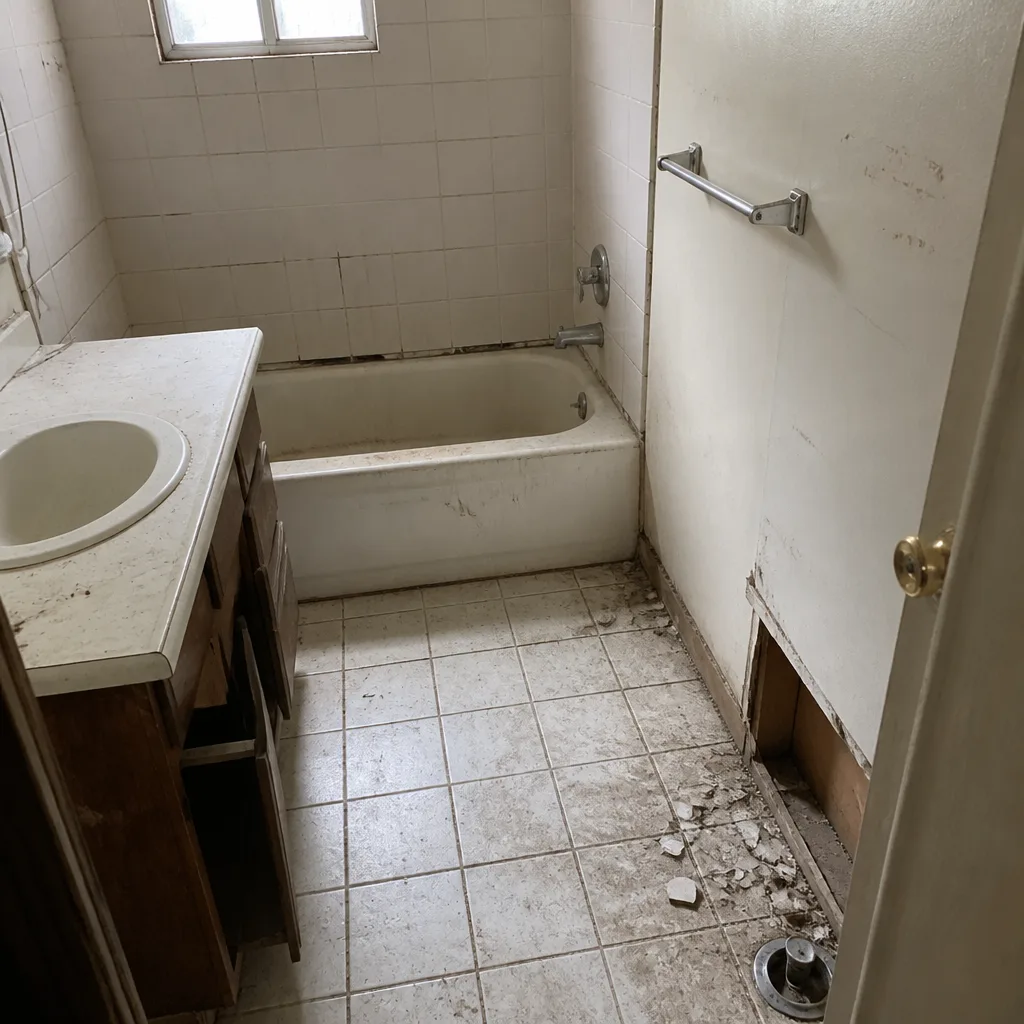
See the difference
 Before
 After
 Before
 After
 Before
 After
When to Call a Professional
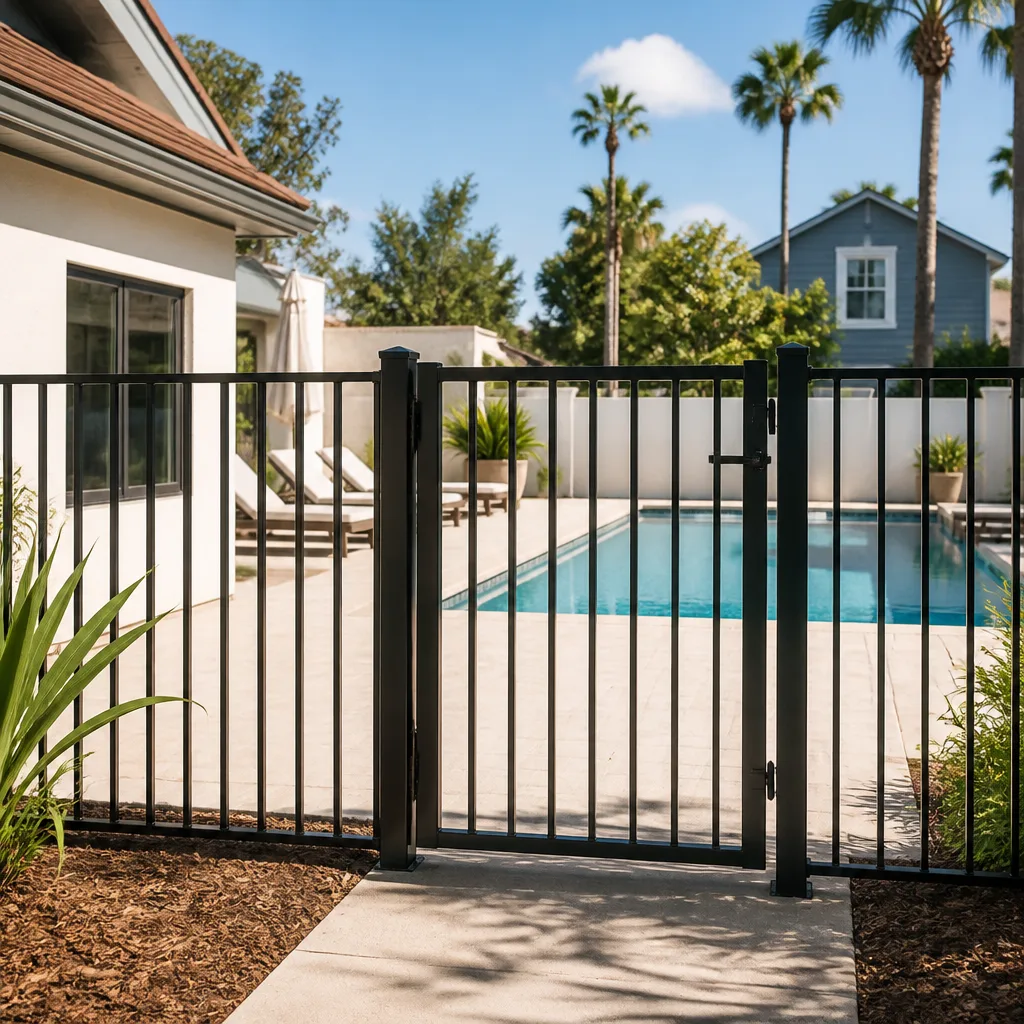
The line we draw is clear: if the project involves new post-setting, sloped ground, shared property lines, or a permit, call a professional. Those are the four conditions where DIY failures cost the most and where the repair bill reliably exceeds the original savings. Board replacement, staining, hardware swaps, and minor gate tuning stay firmly in the homeowner’s camp.
Call a professional for anything involving post footings, anything on a grade steeper than a gentle slope, any boundary fence shared with a neighbor, any project that requires a city permit or HOA approval, and any fence over the standard height threshold. Call one also if you’ve already started a DIY install and the posts aren’t plumb, the concrete hasn’t set correctly, or the fence is already leaning. Those are the calls we handle as rescues, and we handle them often in Yorba Linda. Groundwork Construction Co. of Yorba Linda offers free estimates in Yorba Linda – call (888) 255-9354.
Frequently Asked Questions
Professional fence installation in Yorba Linda typically runs in the $40 to $75 per linear foot range for wood, and $55 to $95 for vinyl, depending on grade, material grade, and permit factors. DIY materials for the same project usually run $15 to $35 per linear foot, but rarely accounts for the corrective cost when a post fails. Call (888) 255-9354 for an exact quote – estimates are free.
Yes. Board replacement is one of the safest DIY fence tasks, assuming the post and rail are sound. Match the board profile, size, and stain, then remove and replace the piece. If the board you’re replacing sits at the base of the post and the post looks soft or waterlogged, stop and have it looked at, because a single rotten board is sometimes a symptom of a post that’s failing.
Yorba Linda generally requires a permit for fences over the standard height threshold, which sits around six feet for rear and side yards and lower for front yards. HOA architectural review often stacks on top. Confirm with the City of Yorba Linda’s building department before digging, and never assume the current fence on the property was permitted just because it exists.
Most residential fence installations complete in two to four days, depending on length, material, grade, and permit timing. Post-setting alone takes 24 to 48 hours of cure time, which is why the process is rarely a single-day job even on a short run. Sloped lots and stepped panel layouts take longer, and permitting adds time on the front end. Call (888) 255-9354 to schedule a free estimate.
A real workmanship warranty should cover the installation itself – post footings, panel alignment, gate function – for a defined term, typically a minimum of one year. Material warranties are separate and come from the manufacturer. Our 730-Day Done Right Promise covers the workmanship side: if it’s not done right, we make it right. Ask any contractor for the warranty in writing before signing, and read the exclusions.
It’s worth DIYing the board-level work – replacement, staining, hardware, minor gate fixes. It’s rarely worth DIYing the post-setting, sloped layout, or permit side. Most of the failures we get called out to fix started as a well-intentioned install where the posts weren’t set deep enough or the concrete wasn’t mixed right, and the corrective cost exceeded the original savings. Call (888) 255-9354 to walk through your project and see whether the DIY path is realistic.
The Bottom Line
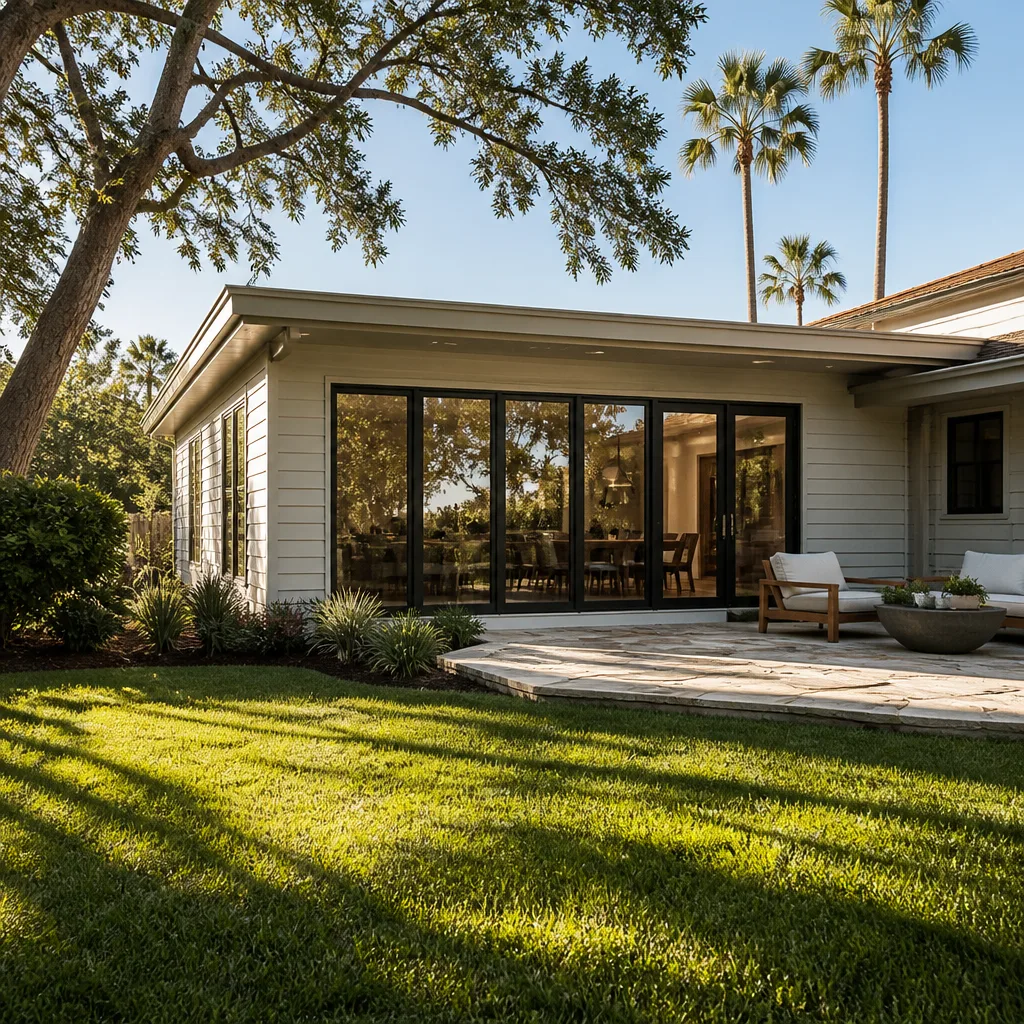
Replacing boards, staining, swapping hardware, and tuning a gate are genuinely yours to handle. Setting posts, working a sloped lot, navigating California’s shared-property-line rules, and pulling the right permits are where DIY fence installation stops being a savings and starts being a gamble. The failure mode is silent and expensive, and the repair usually costs more than the professional install would have. If you’re planning fence work in Yorba Linda, get the free estimate before you pick up a shovel.
At Groundwork Construction Co. of Yorba Linda, we build fence installation with the same discipline we bring to every trade we handle – verified brand partners, background-checked and uniformed technicians, a live person on the phone 24/7 at (888) 255-9354, upfront pricing with no surprises, and every fence project backed in writing by the 730-Day Done Right Promise. From foundation to finish line, we’re the single contractor for the property-wide conversation. Call (888) 255-9354 for your free estimate and design consult – we’ll set the plan, pull the permits, and build the fence right the first time. Our technicians bring up to 12 years of experience to the work, and we pair 0% financing for 18 months with $1,000 off any project over $10,000 to make the right decision financially accessible.
Written by the team at Groundwork Construction Co. of Yorba Linda.