
Free written scope consultation - allowances, timeline, and change-order rules on paper before a single trade is scheduled
Styles & brands we work with
- Kitchen remodeling
- Bathroom remodeling
- Home additions & ADU
- Roofing
- Windows & doors
- Driveway & pavers
- Fence
See the difference
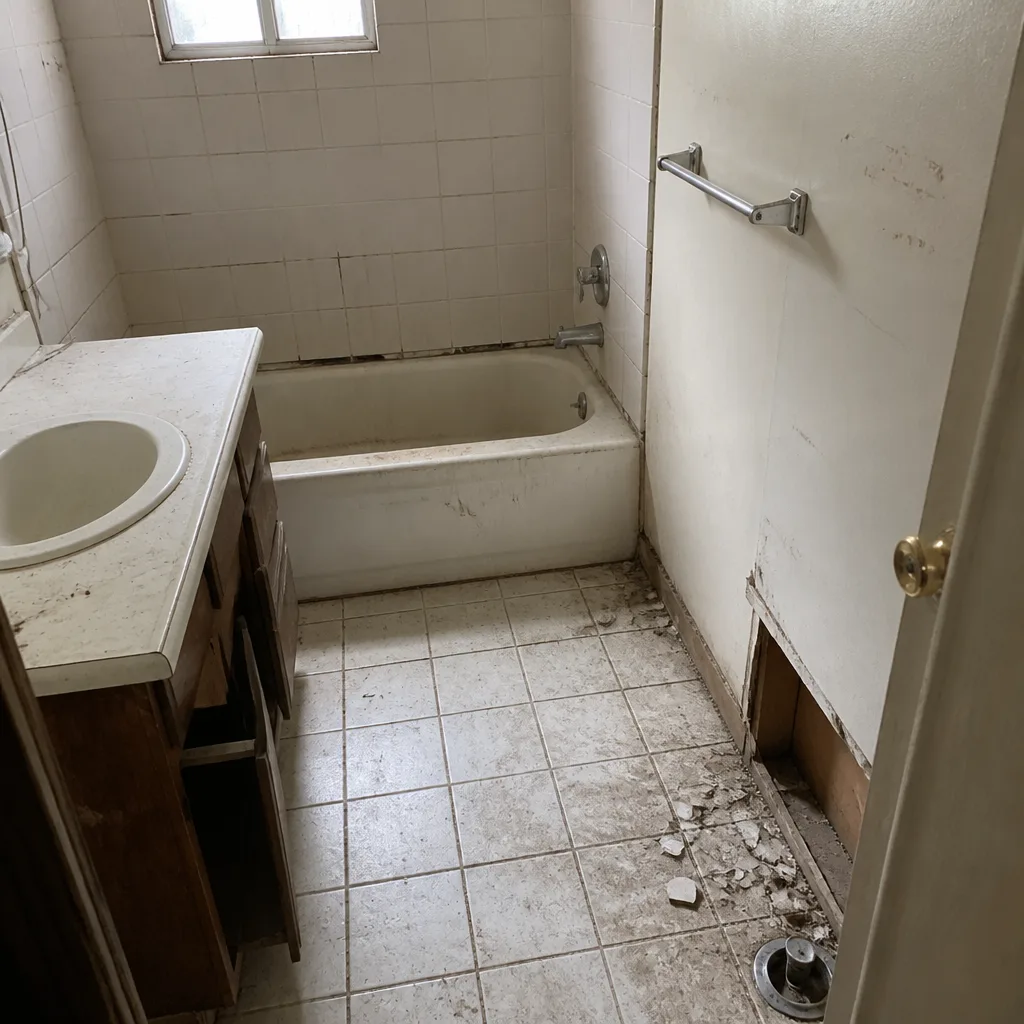 Before
 After
 Before
 After
 Before
 After
Chain Link vs Wood Fence in Yorba Linda: Which One Belongs on Your Slope?
Choose chain link if your fence runs along a slope, a retaining wall, or a drainage channel in Yorba Linda; choose wood if you need privacy on a flat, visible side of the lot. On our city’s graded hillside lots, wood panel fences behave like rigid sails that catch soil pressure, rack, and eventually pull posts, while chain link flexes with minor movement and lets you see erosion before it becomes a repair bill. Most Yorba Linda homeowners we quote are weighing exactly this, and it’s worth a straight conversation before you buy anything. Call (888) 255-9354 and a live person will walk through your site.
Key takeaways:
- On sloped lots, chain link is usually the more durable property-line fence because it tolerates small post shifts instead of transferring them.
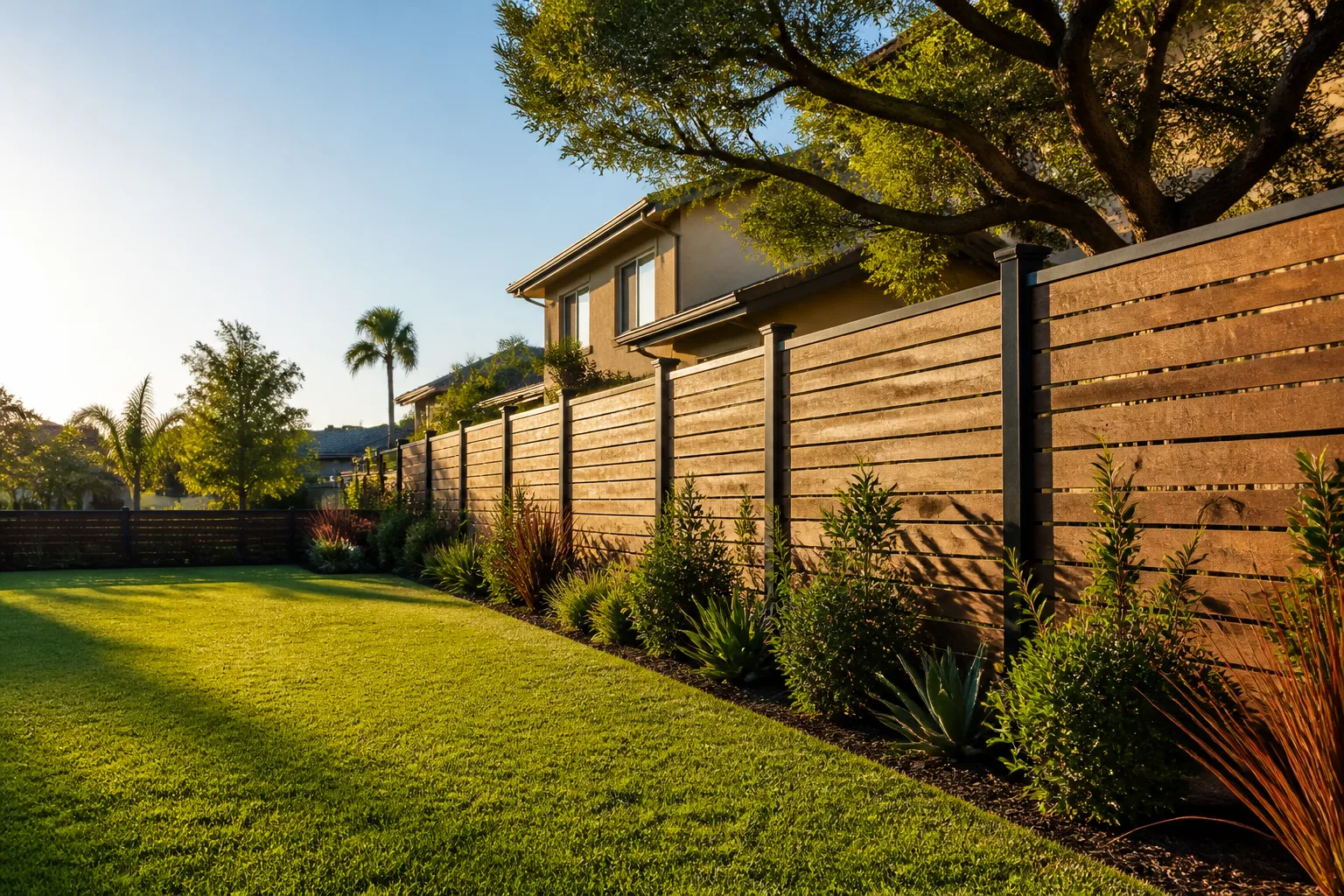
- Wood and vinyl still win for privacy and curb appeal on the flat rear patio side.
- Installed cost per linear foot favors chain link; commercial-spec hillside installs cost more than the big-box residential kits, and that gap matters.
- A hybrid layout (chain link on the slope, wood where you sit outside) is the pattern that holds up best on Yorba Linda lots.
Why does the ground under your fence decide the material?
Because a fence is a structural system anchored in soil, not a decorative panel. Yorba Linda is a hillside city where nearly every lot has some slope, and much of the housing stock was platted during the 1960s through 1980s tract boom. Those lots now carry original drainage systems, aging timber retaining walls, and expansive soils that swell and shrink with our wet-season rain and dry summers. When soil creeps or a swale backs up, the fence above it takes the load.
Here’s the engineering difference in plain terms. A wood panel fence is a diaphragm: each panel is rigid, so pressure on one section pulls on the next and the next, straight down the run until a post leans, a rail splits, or a panel lifts out of the ground. Chain link mesh, by contrast, works with tension wire and flexible fabric. If a post deflects a fraction of an inch after a storm, the mesh absorbs it and the fence keeps doing its job. That’s not an aesthetic argument, it’s a load-path argument, and it’s the one most comparison articles skip.
What the hillside streets off Imperial Highway and Yorba Linda Boulevard teach us
In those older tracts, we regularly see failing timber-and-wood retaining walls from the 1970s. Replacing a wall there can trigger a city engineering review and sometimes a geotechnical report, a permit quirk flatland neighbors rarely encounter. If your fence sits above or below one of these walls, wood panels add lateral load to a system that’s already stressed. Chain link doesn’t. If you want to see the full scope of what we install, start with our Fence Installation page and then come back here for the material decision.
What should you look for when comparing chain link and wood on a real Yorba Linda lot?
Look at four things: slope angle, drainage adjacency, sight lines, and where you actually spend time outdoors. Whoever installs your fence should assess all four before recommending a material, not after.
- Slope angle. Racking a wood fence to follow a grade stresses rails and post connections. Chain link follows grade with less structural penalty.
- Drainage adjacency. If a swale, channel drain, or downslope wall sits near the fence line, you want to see it.
- Sight lines. On rear property lines along slope lots, chain link lets you monitor erosion and wall movement. Wood hides it until failure.
- Use zones. Privacy matters on the patio side; performance matters on the boundary.
The sight-line point isn’t abstract here. Homeowners who went through the 2008 Freeway Complex fire and the debris flows that followed understand what hidden slope conditions cost. A fence you can see through is a low-cost early-warning system for erosion on a graded lot. That’s a practical reason chain link gets specified on boundary lines even when the homeowner prefers wood aesthetically. Our technicians have up to 12 years of experience reading exactly these conditions, and every project is backed by the 730-Day Done Right Promise: if it’s not done right, we make it right.
What does chain link vs wood fence cost in Yorba Linda?
Chain link is the lower installed cost per linear foot for a property-line fence; wood costs more and typically needs more maintenance over its life. Most full property-line fence projects in Yorba Linda land in the $3,500-$9,000 range. The numbers below show why the range is wide, and why a hillside install costs more than a flat one.
| Line item | Typical Yorba Linda range |
|---|---|
| Chain link, residential kit grade (flat lot) | Lowest installed cost per linear foot |
| Chain link, commercial-spec with galvanized posts and tension wire (slope install) | Higher than kit grade; still usually under comparable wood |
| Wood privacy fence, flat rear yard | Mid to upper end of the $3,500-$9,000 band |
| Vinyl fence installation (flat rear yard) | $3,500-$9,000 |
| Aluminum fence installation | $4,000-$10,000 |
Two things drive cost on our city’s lots. First, slope installations need commercial-spec materials: thicker galvanized posts, proper tension wire, and posts set at consistent depth along the grade. The cheap residential kits sold at box stores aren’t built for that, and they fail first at the bases. Second, if your fence ties into a retaining wall that needs work, the fence can’t be quoted in isolation. That’s where home construction experience matters more than fence-only experience.
Our pricing is upfront with no surprises, and we offer 0% financing for 18 months plus $1,000 off projects over $10,000. The number you see is the number you pay.
What’s the smart layout for a sloped Yorba Linda property?
Use a hybrid: chain link where structural performance and sight lines matter, wood or vinyl where you need privacy. This is the recommendation almost no side-by-side comparison gives you, and it’s the one that fits Yorba Linda lots best.
- Slope boundary and utility side: chain link, commercial-spec, installed to follow grade.
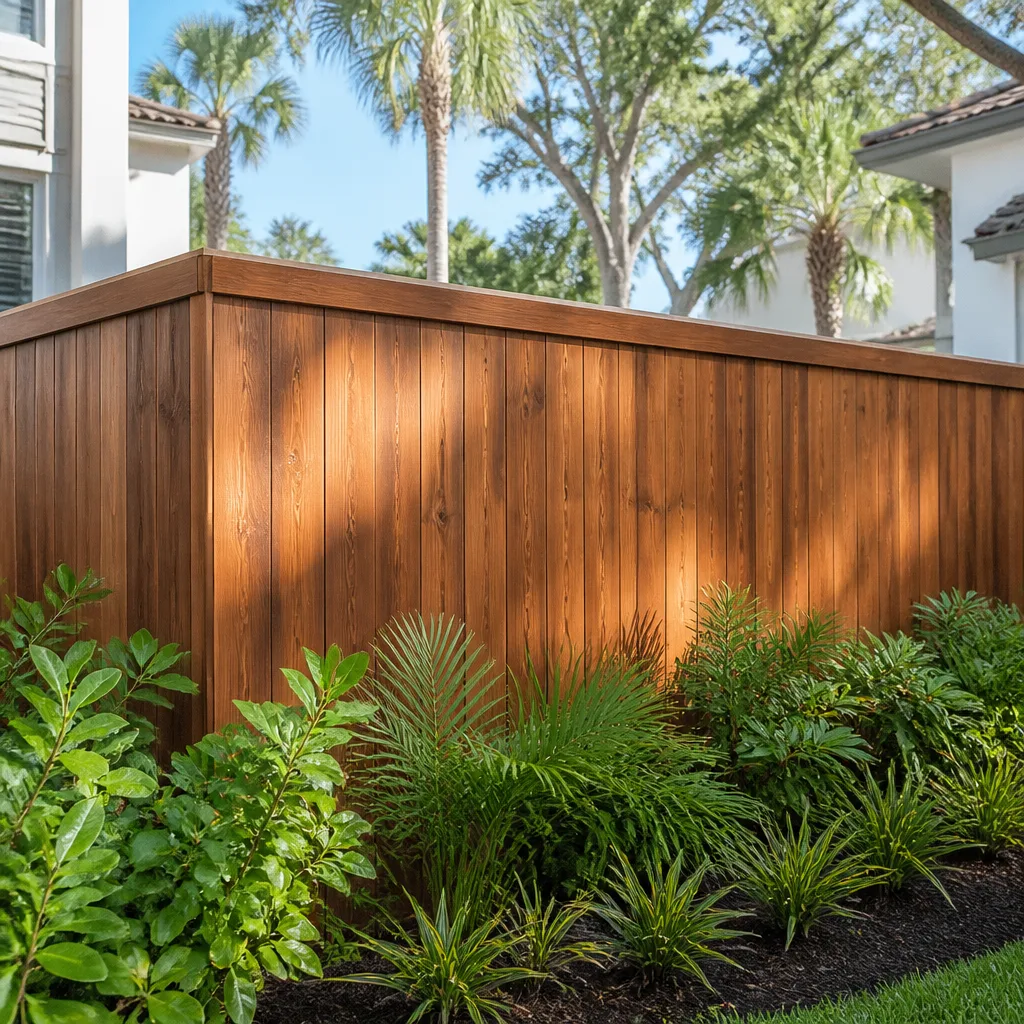
- Rear patio and entertaining side: wood or vinyl privacy panels.
- Drainage channels and retaining wall faces: keep them visible; a see-through fence here earns its keep.
The result is a property line that survives our storm cycles and a rear yard that feels private. Both sections can be installed on the same visit in many cases, and both fall under the same workmanship guarantee. If you want to review material options without waiting for a Monday callback, our phone line is answered by a live person 24/7.
Is it cheaper to repair or replace a failing wood fence on a slope?
Replacement usually wins on sloped lots because patching a racked wood panel fence treats the symptom, not the soil movement that caused it. In Yorba Linda, we routinely see spring failures after winter rain concentrates in a few intense storms; a repaired panel goes back in the same stressed position. On a flat rear yard, targeted repair can make sense. On a slope boundary, converting to chain link is often the cheaper long-run decision even though the day-one invoice is higher than a patch job. For an exact number, call (888) 255-9354 and estimates are free.
FAQs
Chain link is better on hillside lots because it flexes with minor post movement instead of transferring soil pressure across the fence run, and it keeps drainage and erosion visible. Wood remains the better choice for privacy on the flat, visible side of a property. Many Yorba Linda homeowners use both.
A wood privacy fence typically sits in the upper part of the $3,500-$9,000 range for a property-line install, while chain link is the lowest installed cost per linear foot. Commercial-spec chain link for a slope costs more than a residential kit but usually less than comparable wood. Call for a free estimate on your specific lot.
Often yes, but the method matters: posts need consistent depth along the grade and commercial-spec tensioning so the mesh isn’t overloaded. If the slope is actively moving or a 1970s timber wall above it is failing, we’ll flag that and recommend the wall be addressed first. Trenching and excavation near an existing wall are jobs for trained professionals; this isn’t a weekend project.
Fence replacement itself is often straightforward, but when the work ties into a retaining wall, hillside review and engineering can come into play. That’s the part of Yorba Linda permitting flatland comparisons miss. We assess the site first and tell you honestly what’s required before quoting.
If you’d rather have it looked at, Groundwork Construction Co. of Yorba Linda offers a no-pressure assessment in Yorba Linda – call (888) 255-9354 for a free estimate and design consult. Our team will walk your slope, check drainage adjacency, and tell you which material belongs where before you spend a dollar.
Written by the team at Groundwork Construction Co. of Yorba Linda, serving Yorba Linda, CA.