Last updated November 17, 2026


Free written scope consultation - allowances, timeline, and change-order rules on paper before a single trade is scheduled
Bathroom Remodeling Warning Signs Every Homeowner Should Know
The contractor who does the most damage rarely looks like a risk. They show up on time. They have photos on a tablet. Their price lands just below the others and feels almost reasonable. That’s the trap. In our experience across Yorba Linda and the surrounding North Orange County neighborhoods, the projects that go sideways almost never start with a red flag you can spot from the driveway. They start with a contract you didn’t read closely enough, a scope that was left fuzzy on purpose, and a crew that was hired before anyone checked how the waterproofing would actually be done. This guide covers both kinds of warning signs: the ones you catch before you sign, and the ones that tell you work is being done wrong right now while there’s still time to stop it.
Quick Answer
The biggest bathroom remodeling warning signs are a vague contract that never specifies materials or demolition scope, a bid that’s suspiciously lower than every other quote, no written waterproofing method, and a contractor who can’t name their own subcontractors or warranty terms. On an active job, watch for skipped waterproofing before tile goes up, drywall used in wet zones, and change orders that appear out of nowhere. Catching these early in a Yorba Linda remodel saves thousands and months of rework.
Styles & brands we work with
- Kitchen remodeling
- Bathroom remodeling
- Home additions & ADU
- Roofing
- Windows & doors
- Driveway & pavers
- Fence
Table of Contents
- Contract Red Flags You Can Spot Before You Sign
- Why the Lowest Bid Usually Costs the Most
- On-Site Warning Signs During Active Construction
- How to Catch Improper Waterproofing Before Tile Is Set
- What a Subcontractor-Heavy Project Structure Means for You
- The Questions That Reveal a Contractor’s Real Standards
- Permits, Code, and Yorba Linda-Specific Requirements
- Common Mistakes to Avoid
Contract Red Flags You Can Spot Before You Sign
The contract is where a bad bathroom remodel is actually built. By the time demo starts, the damage is already written into the paperwork. A well-drafted contract for a bathroom remodel in Yorba Linda should run five to twelve pages and read like a specification document, not a handshake with a number on it. Here’s what to look for.
Vague scope language. Watch for phrases like “install tile per homeowner selection” or “complete plumbing as needed.” Those aren’t specifications, they’re escape hatches. A real scope says “install 12×24 porcelain tile on shower walls and floor per attached layout, Schluter Kerdi waterproofing system, 1/8-inch grout joints, sanded grout in color X.” If the contract won’t commit to a product, a quantity, and a method, the contractor has left themselves room to substitute the cheapest option that technically fulfills the sentence.
No demolition clause. Demolition is the part of a bathroom remodel most likely to reveal surprises: rotted subfloor, old galvanized plumbing, moisture-damaged framing. If the contract doesn’t spell out what demolition includes and how unforeseen rot or water damage gets priced, you’ve signed a blank check. Ask specifically: “What’s your rate for replacing a section of subfloor if you find rot under the tub?” A contractor with real standards answers with a real number. One who shrugs hasn’t done enough of these.
Missing material specs. Every fixture, valve, drain, cement board, and waterproofing membrane should be named by brand and model. In our experience, the difference between a Kohler valve and a no-name import isn’t cosmetic. It’s the difference between a cartridge you can replace in ten years and a valve body that has to be cut out of the wall. Missing specs are missing accountability.
No warranty language in writing. If the word “warranty” appears once in a footer, that’s not a warranty. Real workmanship guarantees state a length, what’s covered, and what happens if something fails. The 730-Day Done Right Promise exists precisely because “we stand behind our work” is a sentence every contractor says and almost none can back up in writing.
- Scope that names products, quantities, and installation methods – not just categories
- A written demolition clause with pricing for uncovered damage
- Every fixture and material named by brand and model number
- A stated workmanship warranty with a length and a remedy
- A payment schedule tied to milestones, never a large deposit up front
- A named change-order process with signed approval required before extra work
Why the Lowest Bid Usually Costs the Most
A bathroom remodel in Yorba Linda typically runs between $18,000 and $45,000 for a mid-grade full renovation, and a primary bath with a walk-in shower, freestanding tub, and high-end tile can push past $60,000. When one bid comes in at $12,000 while three others sit at $24,000, the difference isn’t magic. It’s math. Something got removed from the scope, and that something will show up later as a change order, a shortcut, or a failure you’ll pay to fix twice.
Here’s how that plays out. The low bidder assumes standard drywall behind tile instead of cement board and a waterproof membrane. That works fine for two or three years – long enough for the warranty to expire – then mold blooms behind the wall and the whole shower has to come out. Or the low bidder skips the permit, which means the electrical work for your new vanity lighting and the plumbing for your relocated shower valve were never inspected. In Yorba Linda, unpermitted bathroom work becomes a disclosure problem the day you sell, and Orange County buyers and their agents ask for the permit history.
The other trap is change orders. A contractor who bid low to win the job has two choices: eat the difference or recover it from you. In our experience, the second one is common. The written bid didn’t include the tile backer board, the shower valve trim, or the vanity plumbing rough-in, so each of those arrives as a separate change order mid-project. Once your bathroom is torn apart and your family is sharing one bath, you don’t have much negotiating room. No-hassle upfront pricing exists to prevent exactly this – the number on the estimate is the number on the invoice, and the scope that supports it is written out in full before anyone picks up a hammer.
The healthy sign isn’t the lowest number or the highest. It’s a bid that’s itemized line by line, includes every fixture and material by name, and lands within 10-15% of the other serious bids. If you’re getting wildly different numbers, you’re not comparing the same project.
On-Site Warning Signs During Active Construction
Once work starts, you’re not a passive observer. You’re the person who sees the bathroom every day. These are the on-site signs we tell every Yorba Linda homeowner to watch for, because each one means work is being done wrong right now.
- No cement board in the wet zone. Standard drywall – green board included – has no place on your shower walls. The TCNA standard for wet areas calls for cement backer board or a bonded waterproofing membrane. If you see purple or green drywall going up around the shower, stop the work and ask questions before tile hides it.
- Tile set directly on drywall. Tile adhesive will stick to drywall. It just won’t stay. Thinset needs a rigid, moisture-stable substrate, and drywall isn’t one.
- No waterproofing membrane visible. Look for a painted-on membrane (red, blue, or orange is common) or a sheet membrane laid over the cement board. If the backer board is bare when the tile boxes come out, something was skipped.
- Subfloor patches screwed down but not re-secured at the membrane. A pre-sloped shower pan is critical. If you see a flat mortar bed where the pan should pitch toward the drain, water will pool, and pooling water is the beginning of a callback.
- Crews from a truck with no name on it. Background-checked, uniformed technicians are a contract-level commitment, not a nice extra. Unmarked vehicles arriving at your home with no company identification is a signal to ask who, exactly, is in your bathroom.
- Nobody answers when you call. A bathroom remodel takes weeks. Every day you can’t reach the contractor is a day that the schedule slips and problems pile up. Calls answered by a live person at any hour is the standard, not the exception.
- Improvised solutions. A contractor who says “we’ll figure it out” on the tile layout, the shower pan, or the electrical routing is guessing on your dime. In our experience, the good ones show you the plan before they cut.
None of these signs require technical knowledge to spot. You’re looking for discipline: the right materials for the right zone, checked before they get covered up. For a broader view of how we handle the same standards on outdoor builds, see Groundwork Construction Co. of Yorba Linda home.
How to Catch Improper Waterproofing Before Tile Is Set
Waterproofing is where a bathroom remodel is won or lost, and it’s the part that gets covered up first. Once tile goes over the shower walls and floor, you can’t see the waterproofing again without tearing the whole thing out. This is why the inspection window is the most important hour of the entire project, and why you should ask to walk through it before the first tile is set.
Waterproofing in a shower assembly typically comes in two forms. One is a liquid-applied membrane painted onto cement backer board in two or three coats. The other is a bonded sheet membrane, either bonded directly to the backer or as a full system with integrated drain bonding. Both work when installed to spec. Both fail when corners are cut, and the cuts are predictable.
- Check the seams and corners. Every joint where two cement boards meet, and every inside corner, should be taped and sealed with the manufacturer’s reinforcing fabric and membrane. If you see dry seams under a membrane coat, water will find them.
- Confirm the membrane covers the entire wet zone. That means shower walls, shower floor, the shower curb, and at least a few inches out onto the bathroom floor. Missing curb coverage is a classic shortcut. So is skipping the floor outside the shower.
- Look at the drain connection. The waterproofing must integrate with the drain flange, and the pan must be pre-sloped so the membrane drains. A membrane nailed or stapled through is a membrane that leaks at every fastener.
- Verify a flood test if you have a tiled shower pan. A standard test plugs the drain and fills the pan with water for 24 hours to confirm no leaks. Ask to see the results. If nobody planned for it, that’s the warning sign.
- Ask who installs the membrane. In our experience, the best-defined jobs have one person accountable for the entire waterproofing system, from backer to membrane to tile, not a split between the “tile guy” and the “plumber.”
Yorba Linda isn’t humid enough to hide a failing shower for long. The dry summers and warm interior temperatures bake moisture into the wall cavity, where it moves into framing and drywall, and by the time you notice the soft spot or the smell, you’re looking at a full rebuild. Catching it before tile is set is the entire game.
What a Subcontractor-Heavy Project Structure Means for You
Almost every bathroom remodel involves specialty trades: plumbing, electrical, tile setting, drywall, and sometimes cabinetry. The question isn’t whether subcontractors will be involved – it’s who owns the outcome when they disagree. That distinction matters when your shower valve gets installed by one trade and the tile setter has to work around plumbing that was roughed in at the wrong depth. Somebody has to be accountable, and a project structure that doesn’t name that person is a project where everyone will point at everyone else.
Here’s the practical version. In a well-run project, the general contractor holds the schedule, walks every trade through the plan, and owns any rework when a trade hands off bad work. When something fails – and in remodels, something always needs adjustment – a single accountable party absorbs the cost and fixes it. In a poorly run project, the plumber blames the tile setter, the tile setter blames the framer, and the homeowner is left explaining the problem to three separate companies who each sent a different invoice.
Ask directly: “If the tile setter and the plumber disagree about where my shower valve should sit, who resolves it, and who pays if the wall gets opened up again?” Listen to the answer. A contractor with real systems will describe a process. A contractor without them will start explaining why it won’t happen.
This is where a full-scope partner with verified brand partners and a written workmanship guarantee does real work for you. A single point of accountability on the bathroom – and on the rest of the home, which is why we also handle Home Additions & ADU in Yorba Linda under the same standards – means that when something needs to be made right, there’s one team to call, not three. Our technicians have up to 12 years of experience, and the 730-Day Done Right Promise covers the finished work for two full years.
The Questions That Reveal a Contractor’s Real Standards
You don’t need to be a builder to vet a builder. You need a short list of questions that a real professional answers without flinching, because the answers expose how they actually work. These are the ones we’d tell any Yorba Linda homeowner to ask before signing anything.
- “Walk me through your waterproofing system by name.” If the answer is “we tape the joints and use good thinset,” keep looking. A serious contractor names the membrane (Schluter, Laticrete, Mapei, Wedi), the backer board, and the drain bonding method. The specificity is the point.
- “What happens if you find rot or water damage under my tub?” The right answer is a written rate for replacement, not a verbal promise. Ask to see how it appears in the contract.
- “Who pulls the permit?” It should be the general contractor, in their name. If the answer is “you can pull it as owner-builder,” that shifts the liability to you if the inspection fails.
- “Can I see your warranty in writing before we sign?” Every real workmanship guarantee is documented. A two-year written guarantee like the 730-Day Done Right Promise is a different product than a handshake.
- “If something goes wrong after you finish, who do I call and how fast do I hear back?” Look for a real callback process. A company that answers calls with a live person around the clock is signaling that they intend to be reachable after the check clears.
- “What are three recent bathroom remodels you can put me in touch with the owners of?” Not photos. Phone numbers. A confident contractor will give them. A cautious one will offer a slideshow.
- “What’s your pricing process – a firm number or a range?” The answer should be a written line-item estimate tied to a fixed scope, not a range with “some flexibility.” Upfront pricing, no surprises, is a system you can name.
One of the reasons we can answer those questions without hesitation is that our process is built around them. Free estimates, written line-item quotes, and background-checked technicians in uniform on every job aren’t extras we add for big projects – they’re how we run every project, from a bathroom in Yorba Linda to a Fence Installation in Yorba Linda.
Permits, Code, and Yorba Linda-Specific Requirements
Bathroom remodels are among the most heavily regulated small projects in a home, because they involve three code systems at once: plumbing, electrical, and building. In Yorba Linda, a cosmetic update like repainting or swapping a vanity top generally doesn’t need a permit. Anything that moves plumbing, adds or relocates electrical, changes the shower pan or tile surrounding it, or alters framing does. The line between the two exists for a reason, and a contractor who suggests skipping it is telling you something about how they work the rest of the project.
The most common permit issue in Yorba Linda bathrooms shows up around the shower valve. Replacing a cartridge on an existing valve doesn’t require a permit. Relocating or replacing the valve body itself does, because it’s part of the plumbing rough-in. The second most common is electrical: adding a GFCI outlet, swapping a light fixture for a licensed electrician’s vent fan, or adding a heated floor circuit each requires an inspection in most cases. Additions that touch structural framing push into a bigger permit and often a plan set.
Unpermitted bathroom work doesn’t stay hidden forever. It surfaces at resale, during a buyer’s inspection, or when an insurance claim depends on whether the work was built to code. In our experience, the cost of pulling a permit is a tiny fraction of the cost of tearing out unpermitted work later. When we run a project, permits are pulled in our name and inspections are passed, and the homeowner gets the record in writing.
- Moving plumbing, relocating the shower valve, or replacing the shower pan typically requires a plumbing permit
- Adding or relocating outlets, lights, or fans requires an electrical permit and inspection
- Structural changes to load-bearing walls need a building permit and often engineered plans
- Smoke and carbon monoxide detectors are usually updated to current code as part of permitted work
- Final inspection sign-off should be part of the written scope, not an open-ended will-do
The same permitting discipline shows up across exterior projects. If your next project is outdoors, our team treats Driveway & Pavers in Yorba Linda with the same permit-first discipline, using Belgard and similar brand partners so the finished product matches the standards inside the house.
Common Mistakes to Avoid
Most of the expensive mistakes we hear about from Yorba Linda homeowners aren’t contractor failures at all. They’re decisions made before the contractor was even chosen. Here are the ones we see most often.
- Hiring on price alone. If the lowest bid is 40% below the others, the scope explains the gap. Figure out what’s missing before you sign – not after the bathroom is torn up.
- Skipping the written scope review. Read the whole contract, twice, and ask about anything vague. “Install tile per homeowner selection” is not a specification, and it’s not what you’re paying for.
- Not asking about waterproofing before demo day. By the time tile is going up, you have one shot to catch a skipped membrane. Ask about the system by name at the estimate.
- Assuming a verbal warranty is a real warranty. If it isn’t written, with a length and a remedy, it doesn’t exist the day you need it. The 730-Day Done Right Promise exists because two years of coverage isn’t something to leave to memory.
- Ignoring permit requirements. Unpermitted work becomes a sale problem, an insurance problem, and a code-enforcement problem. In Yorba Linda, the permit history shows up at resale every time.
- Hiring without a live-person connection. When your crew can’t be reached and all you get is voicemail, your project timeline is being carried by someone who isn’t talking to you. A 24-hour live-person standard is the right baseline.
- Choosing a materials brand you don’t recognize to save a few hundred dollars. A Kohler or KraftMaid fixture is a 20-year decision. A no-name import from a sketchy distributor is a 5-year decision that costs the same to install.
See the difference
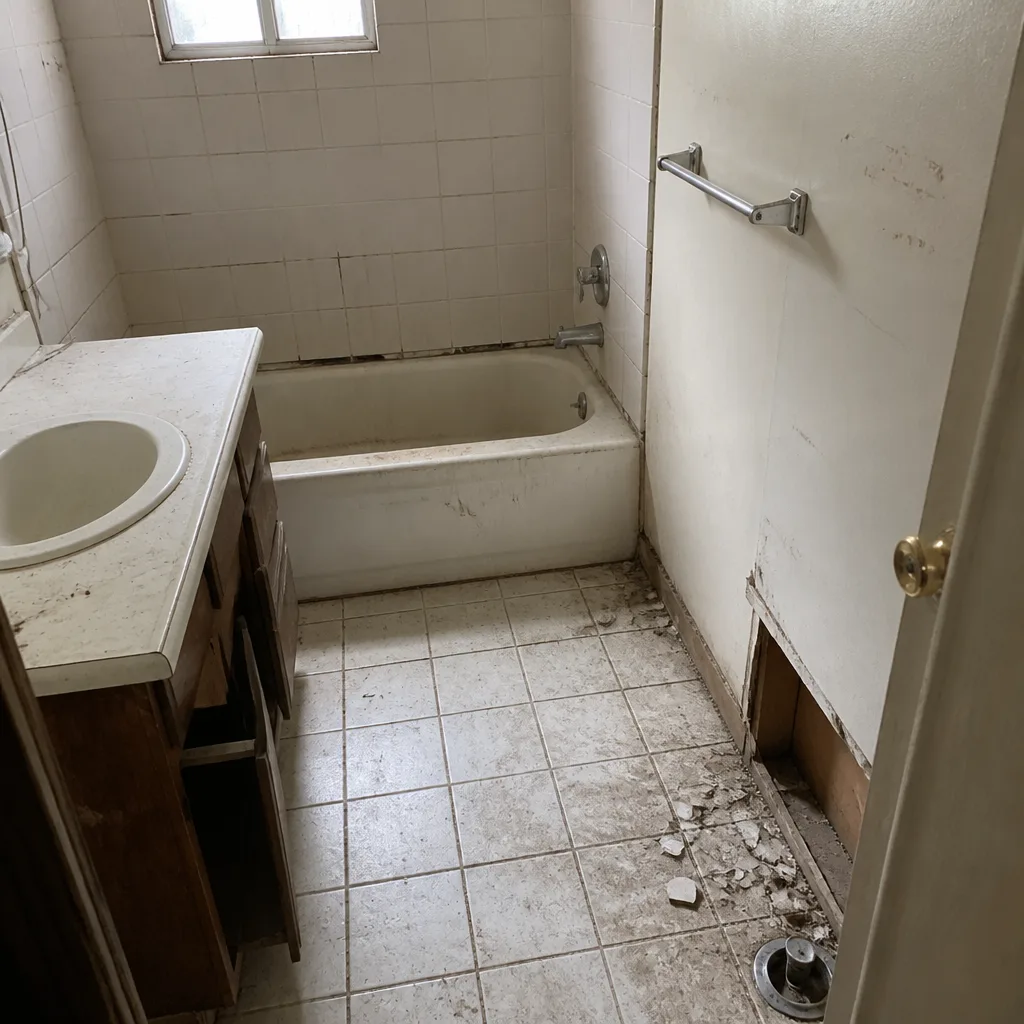 Before
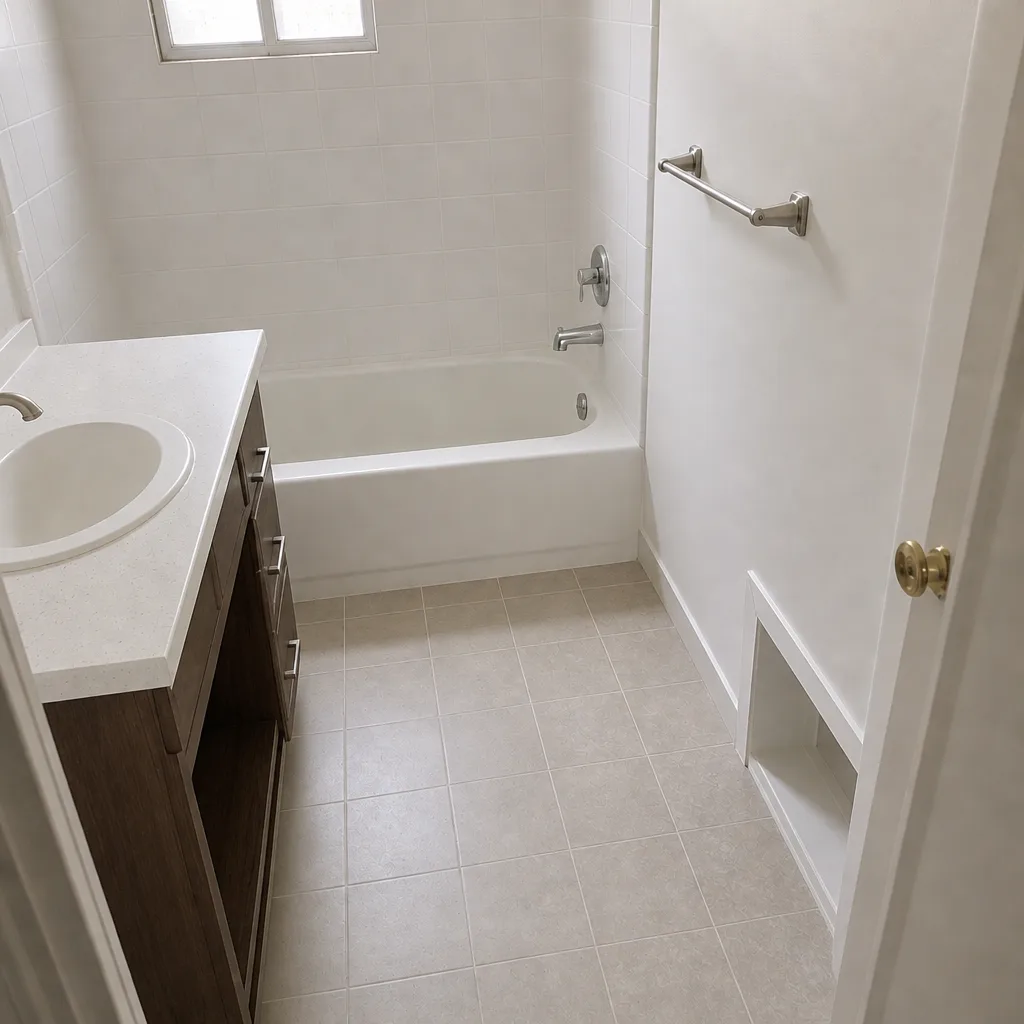 After
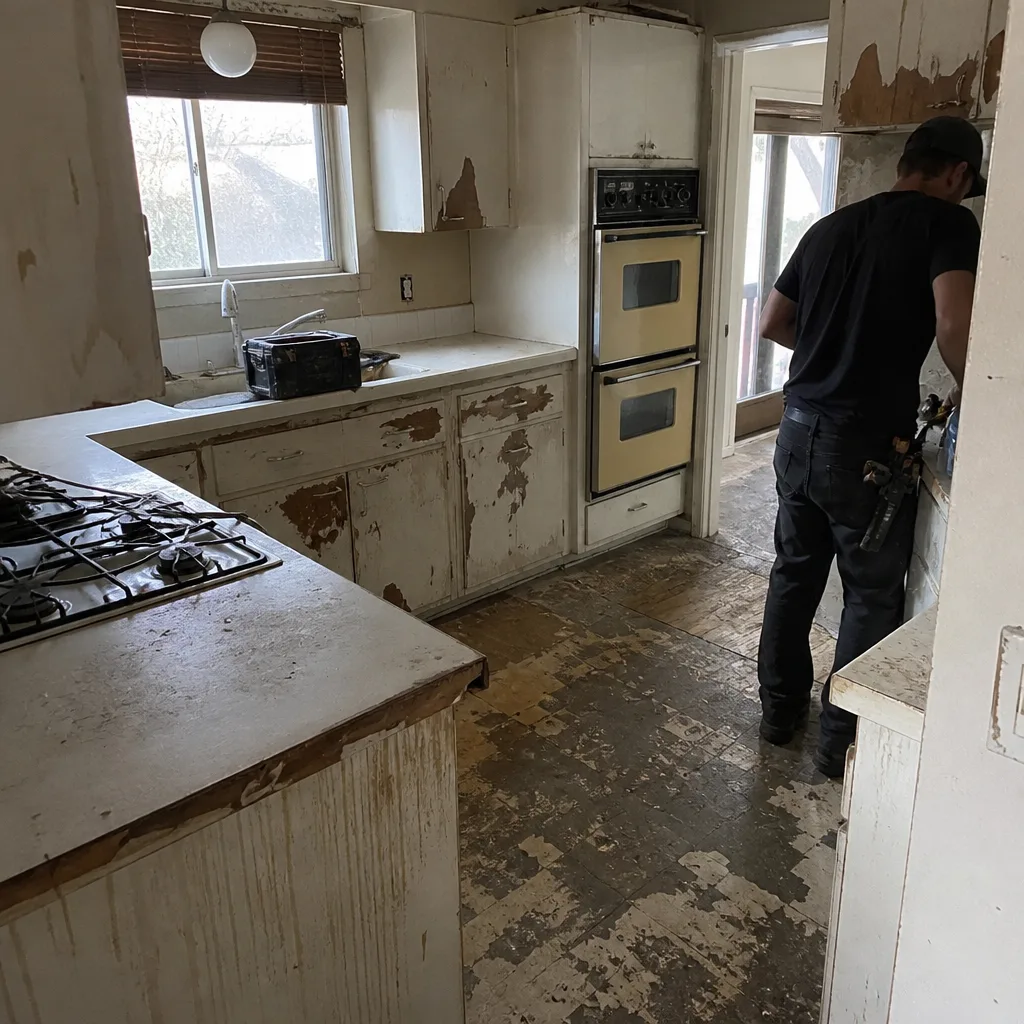 Before
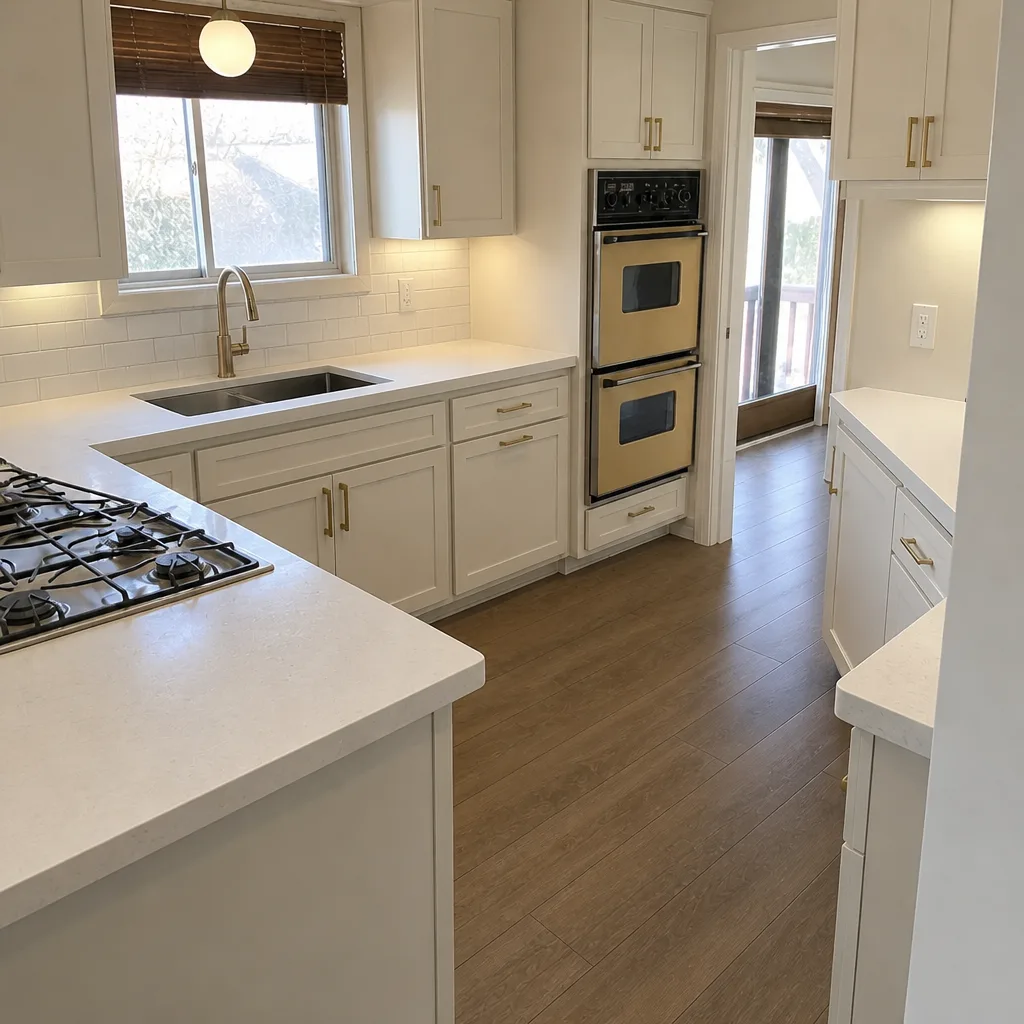 After
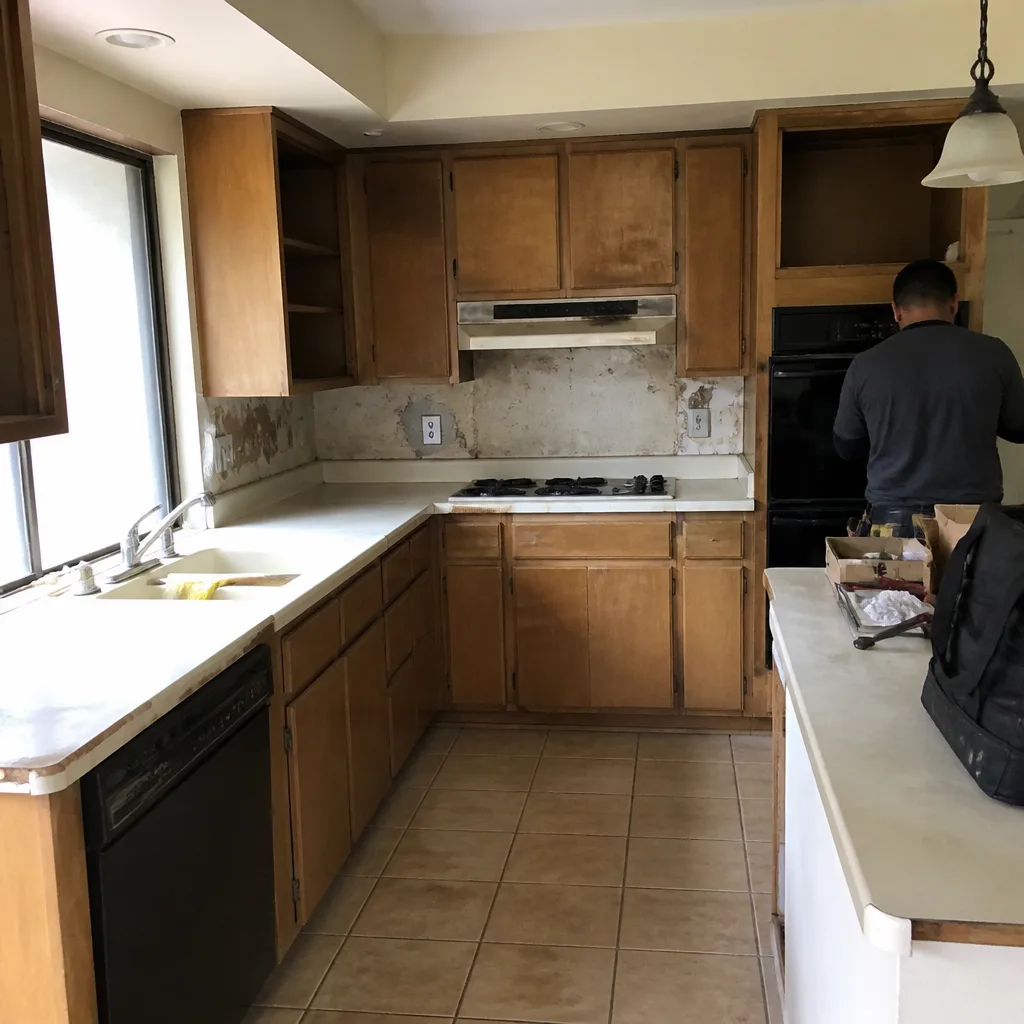 Before
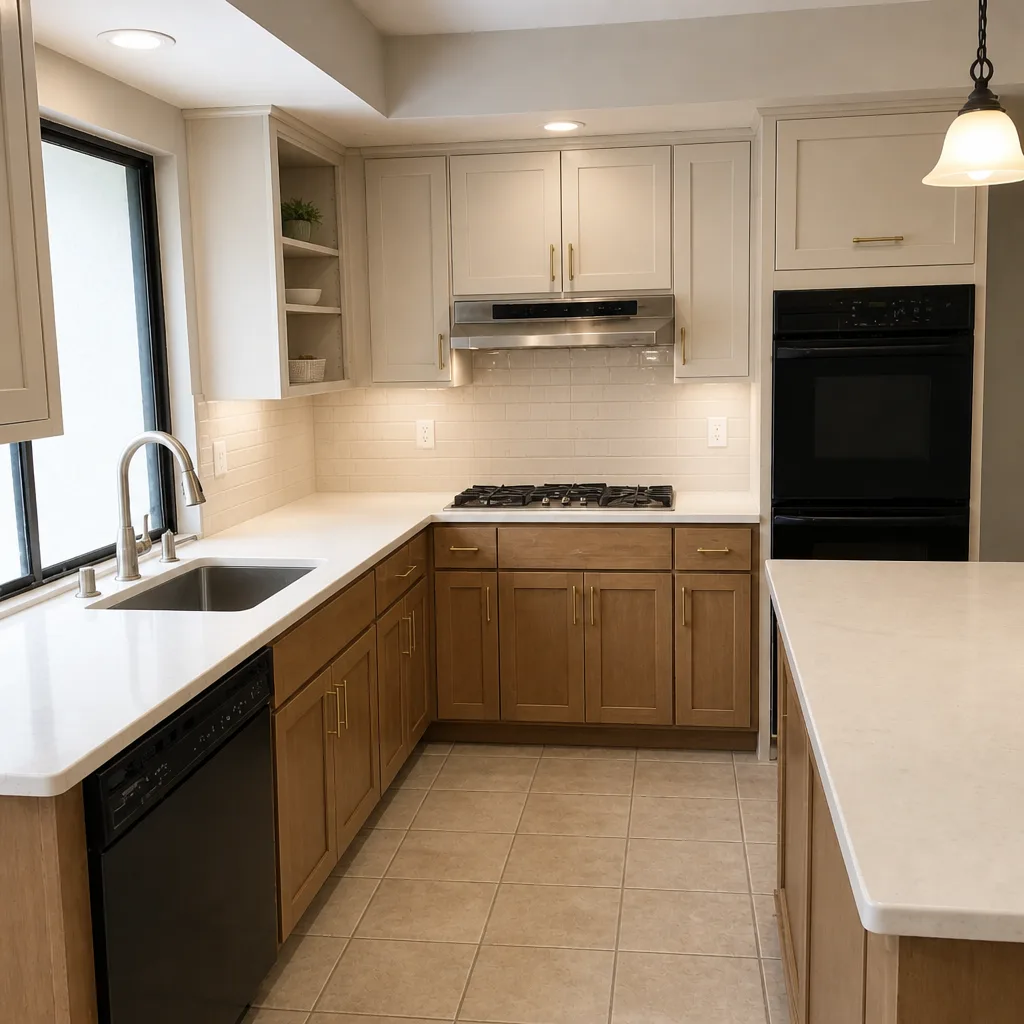 After
When to Call a Professional
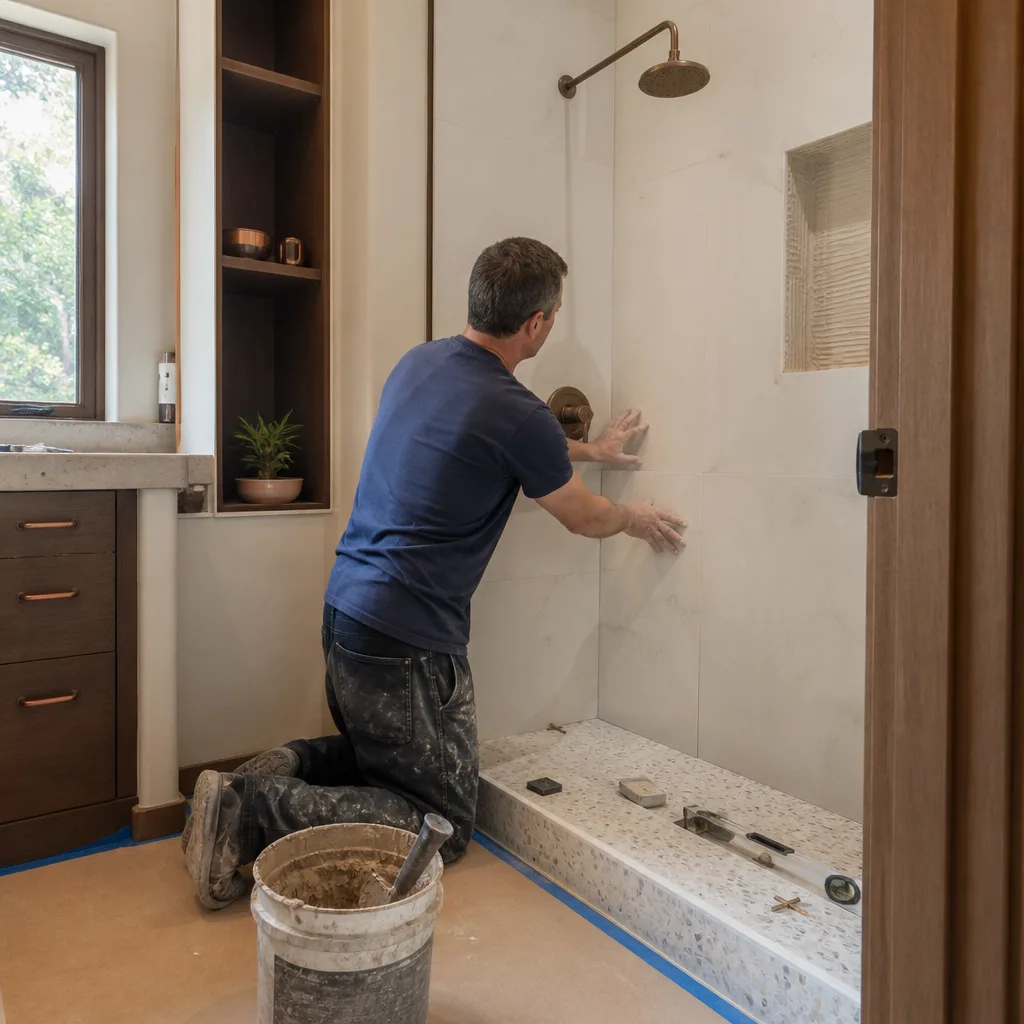
Some bathroom problems are homeowner-repairable: a loose towel bar, a caulk line that’s finally given up, a shower head swap. Others aren’t, and the dividing line is whether water, wiring, or structure is involved. If you see any of the following, it’s time to call a professional.
You’ve discovered a soft spot in the shower wall or floor. You see grout lines consistently cracking after being repaired. There’s visible moisture damage behind tile, or a musty smell that won’t go away. Your shower pan flexes underfoot. You’re planning a remodel that moves plumbing, adds electrical, or changes the shower assembly – that’s a permitted job, and the waterproofing has a zero-mistake margin. Or you’ve received a bid that feels too good, and you want a second set of eyes on the scope before you sign. Groundwork Construction Co. of Yorba Linda offers free estimates in Yorba Linda – call (888) 255-9354 to schedule one. We’ll walk the bathroom with you, put the scope in writing line by line, and tell you what we’d actually do.
Frequently Asked Questions
The clearest single sign is a contract that won’t commit to specifics. If the scope says “install tile” without naming the product, the substrate, and the waterproofing method, the contractor has left room to substitute the cheapest option later. That’s true whether the contractor is inexperienced or just overbooked. In our experience, vague contracts and change orders are the same story told twice. Call (888) 255-9354 for a written scope you can actually compare against other bids – estimates are free.
A mid-grade full bathroom renovation in Yorba Linda typically runs $18,000 to $45,000, and a primary bath with high-end fixtures, a freestanding tub, and premium tile can exceed $60,000. The price depends more on the fixture tier and the tile selection than on bathroom square footage, though layout changes that move plumbing push costs up. Any bid more than 30% below the others deserves a hard look at what got removed. Call (888) 255-9354 for an exact quote on your project – estimates are free.
Look for cement backer board (not drywall) behind the tile, a bonded waterproofing membrane or liquid-applied coating over the entire wet zone, sealed seams and inside corners with reinforcing fabric, and a waterproofed shower curb. If you can’t see it because tile is already installed, look for the early signs: loose or hollow-sounding tile, grout that cracks and reappears, and a persistently musty smell. Any of those signs means it’s worth having a professional look before the damage spreads. Call (888) 255-9354 to schedule an assessment.
Yes, if the work moves plumbing, adds or relocates electrical, changes the shower pan or shower tile assembly, or alters framing. Cosmetic work like repainting, swapping a vanity top, or replacing a light fixture typically doesn’t. The line is defined by whether the work touches a regulated system or structure. A licensed contractor pulls the permit in their own name and schedules the inspections; if a contractor suggests owner-pulled permits to save time, that shifts the liability to you. Call (888) 255-9354 to talk through your specific project scope.
It means accountability depends on who the general contractor designates as responsible for coordinating the trades. In a well-structured project, one party owns the schedule, the handoffs, and any rework when trades disagree. In a poorly structured one, the homeowner ends up in the middle of three separate companies who each point at the others. Ask before signing: “Who pays if the tile has to be removed because the shower valve was set too deep?” Call (888) 255-9354 to see our process for handling exactly those situations.
A full bathroom remodel in Yorba Linda typically takes three to five weeks of active construction once permits are pulled, plus two to six weeks of design, selection, and permitting before demo. A primary bath with layout changes or custom tile work often runs longer because of material lead times. The contractor’s schedule discipline matters more than the length of the estimate. A crew that communicates daily and holds the trades to the schedule finishes on time; one that doesn’t, doesn’t. Call (888) 255-9354 to schedule a free estimate and get an honest timeline for your project.
The Bottom Line
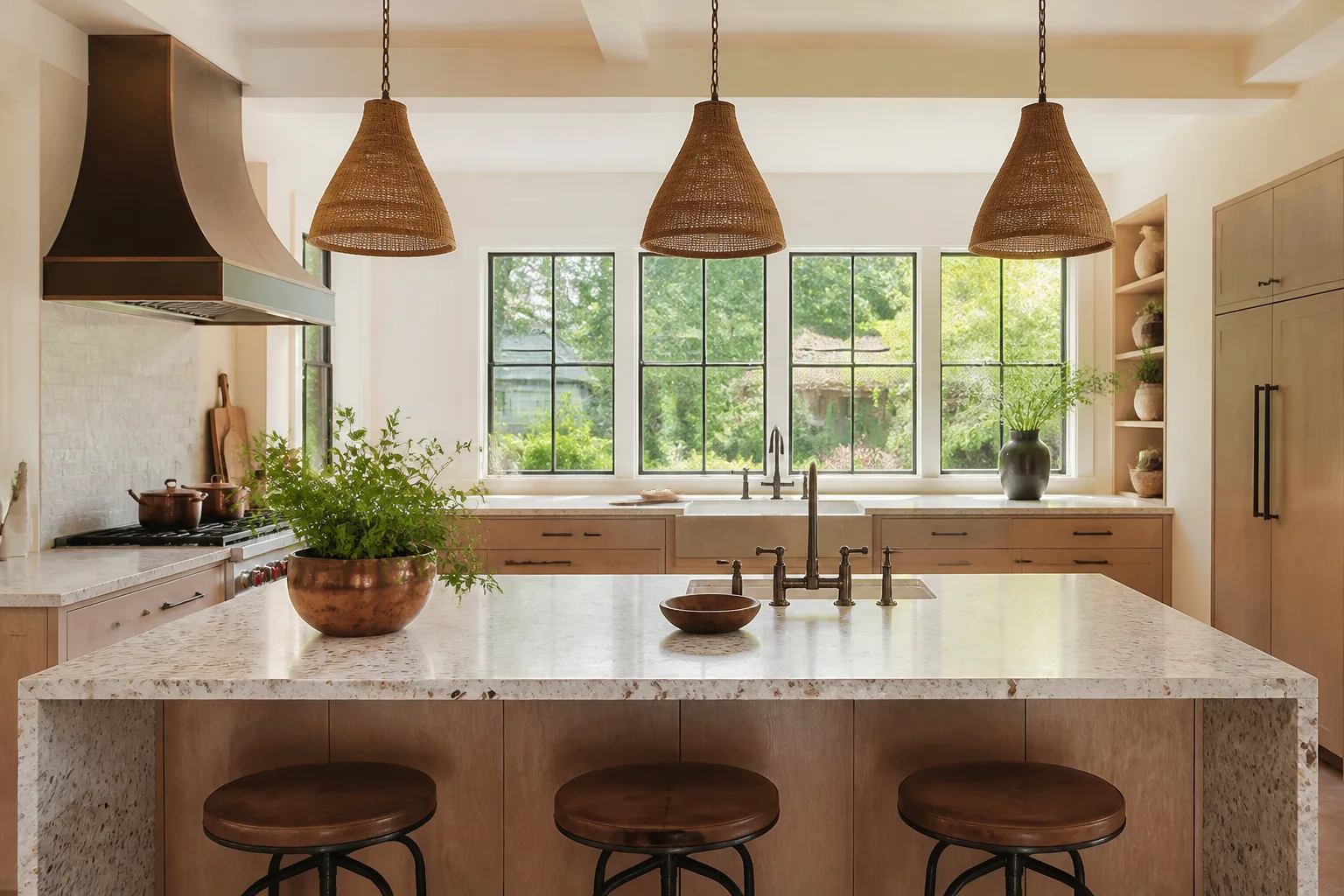
Bathroom remodel disasters are almost always visible in advance. The signs show up in the contract, in the bid that doesn’t add up, in the waterproofing method nobody can name, and in the crew that can’t be reached. Catch them before you sign, and you sidestep most of the ways a bathroom project goes wrong. Catch them during construction, and you still have time to stop the work and fix it. Your job as the homeowner is to ask specific questions and require specific answers – names, numbers, methods, warranty terms. A contractor who can give all of that without flinching is the one worth hiring. If you’re planning a bathroom remodel in Yorba Linda and want the scope, the schedule, and the pricing in writing before you commit, call Groundwork Construction Co. of Yorba Linda at (888) 255-9354 for a free estimate.
Written by the team at Groundwork Construction Co. of Yorba Linda.